



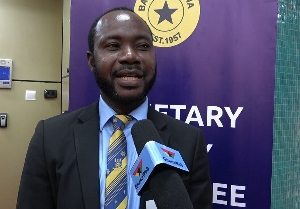
 Dr Adu Owusu Sarkodie is an economist
Economist and Senior Lecturer at the University of Ghana, Dr Adu Owusu Sarkodie, has stated that Ghana’s economic recovery was already underway before the current administration assumed office in January 2025.
He credited both the previous and current governments for maintaining the fiscal consolidation path that has restored macroeconomic stability.
Speaking at the CEO’s Webinar Hub on July 31, 2026, Dr Sarkodie explained that the economic challenges which forced Ghana to seek support from the International Monetary Fund (IMF) in 2022 required difficult measures, including debt restructuring.
He noted that this exercise placed the country’s debt position on a more sustainable footing.
T-bills oversubscribed by 79% as one-year yield edges higher
“When this administration took over, the economy was already on the path of recovery. So, kudos to both the previous administration and the current one for staying the course of fiscal consolidation and achieving this stability we have,” he said.
Dr Sarkodie noted that the debt restructuring programme had significantly improved Ghana’s debt outlook, reducing the debt-to-GDP ratio from unsustainable levels to about 45%.
“We all know the story of how difficult the economy was in 2022. We had to resort to an IMF programme, which was a necessity at that time. A prior action was debt restructuring, which we did, and that has helped us reduce our debt from unsustainable levels to sustainable levels, around 45% of GDP,” he explained.
He added that the gains recorded since 2025, including improved currency stability and fiscal discipline, have been critical for the private sector, which employs the majority of Ghanaian workers.
“There are a little over 13 million Ghanaian workers. Government workers are around 1.1 or 1.2 million. The remaining over 12 million workers are all in the private sector. Therefore, macro stability is important for the private sector to thrive, both large-scale, medium and small-scale,” he noted.
According to Dr Sarkodie, Ghana’s stabilisation has been supported by coordinated fiscal and monetary policies, with government maintaining expenditure controls while the Bank of Ghana pursued tight monetary measures.
However, he questioned whether the 2026 Mid-Year Budget Review reflected the growth shift promised in the main 2026 Budget Statement.
'Something good is happening' - COPEC hails TOR's return to operations
He recalled that the government had pledged to move away from tight fiscal and monetary policies towards increased spending, investment, and job creation.
“The promise in the budget which was read for 2026 was to increase spending, shift from tightening fiscal policies and tight monetary policies to growth, investment and job creation,” he said.
Dr Sarkodie stressed that the mid-year review must therefore be assessed against those commitments to determine whether government has delivered on its promise of transitioning from stabilisation to growth.
DR/SA

Copyright © 1994 - 2026 GhanaWeb. All rights reserved.










