



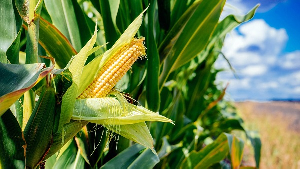
 File photo of maize
Ghana’s maize production is projected to fall by 14% to 3 million tonnes in the 2026/27 marketing year, from an estimated 3.5 million tonnes in 2025/26, as weak producer prices force farmers to reduce the acreage devoted to the crop.
The projected decline would cut output by about 500,000 tonnes in a year, reversing part of the recovery recorded after production difficulties in previous seasons and tightening the supply outlook for one of Ghana’s most important food and feed crops.
The US Department of Agriculture’s Foreign Agricultural Service (FAS) projects the area harvested under maize to decline to 1.05 million hectares from 1.25 million hectares, representing a reduction of 200,000 hectares, or 16%.
The expected contraction is being driven mainly by weaker returns to farmers following a period of excess domestic supply that pushed maize prices lower.
FAS said the decline in prices is expected to encourage producers to scale back maize planting in favour of crops offering better returns, reducing the area available for the 2026/27 harvest.
Maize production recovered strongly in the current marketing year. Output is estimated at 3.5 million tonnes in 2025/26, up from about 3.29 million tonnes in 2024/25, supported by an expansion in cultivated area and improved yields. The higher production left Ghana with substantial stocks entering the new marketing year.
Beginning inventories for 2026/27 are estimated at 1.105 million tonnes, more than three times the 321,000 tonnes carried into 2025/26.
Total maize supply is forecast to fall to 4.14 million tonnes in 2026/27 from 4.56 million tonnes in the current marketing year, a reduction of about 420,000 tonnes.
Consumption, however, is expected to move in the opposite direction.
Total domestic use is projected to increase to 3.515 million tonnes from 3.45 million tonnes, with food, seed and industrial consumption rising to 2.95 million tonnes. Feed and residual use is also expected to increase to 565,000 tonnes from 550,000 tonnes.
The increase in feed demand is particularly important for Ghana’s poultry and livestock industries, where maize remains a major input and movements in grain prices feed directly into production costs.
The combination of lower production and higher consumption is expected to reduce the stocks accumulated from the current season.
Closing maize inventories are projected to fall to 620,000 tonnes in 2026/27 from 1.105 million tonnes, a reduction of about 485,000 tonnes, or 44%.
Imports are nevertheless projected to remain relatively low. FAS expects Ghana to import about 30,000 tonnes of maize during the marketing year, compared with an estimated 65,000 tonnes in 2025/26, as carryover stocks continue to cover part of domestic requirements.
The production outlook highlights a reversal in the maize market after the government moved to manage excess supply and protect producer prices.
Concerns over unsold maize and other grains prompted the government to provide financing for the Ghana Buffer Stock Company to purchase excess produce and strengthen national food reserves. Farmers had complained that abundant supply was depressing prices and leaving stocks unsold.
The expected reduction in acreage suggests that those price conditions are beginning to influence planting decisions.
Yield is projected to improve marginally to 2.86 tonnes per hectare from 2.8 tonnes, but the increase would not be sufficient to compensate for the 200,000-hectare reduction in harvested area.
Weather also remains a risk to the production outlook. The 2026 assessment points to the possibility of above-normal rainfall in some areas, alongside intermittent dry spells, with Ghana’s largely rain-fed maize production remaining exposed to flooding and moisture stress.
The projected contraction therefore reflects a different pressure from the weather-driven production losses Ghana has faced in previous seasons. This time, farmer economics and planting decisions are expected to account for much of the decline.
With output projected to fall by 500,000 tonnes, harvested area by 200,000 hectares and closing stocks by about 44%, the maize market is set to move from managing excess supply towards a tighter balance between production and rising domestic consumption in 2026/27.

Copyright © 1994 - 2026 GhanaWeb. All rights reserved.










