



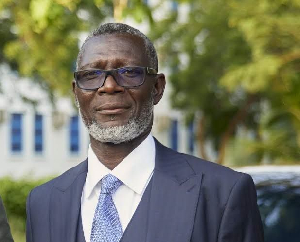
 Justice Edward Amoako Asante has been nominated as a Supreme Court judge
Supreme Court nominee, Justice Edward Amoako Asante, has said his appointment to the apex court will not affect his independence as a judge.
Speaking during his vetting before Parliament’s Appointments Committee on Thursday, August 27, 2026, Justice Amoako Asante said judges are bound by their oath to be fair and equitable to everyone who appears before them.
'Why the rush?' - Minority protests vetting of Supreme Court nominees
He stated that judges decide cases based on the facts and the law, and should not be influenced by the people who appointed them.
“Basically, as a judge, when you are appointed, you swear an oath, which you go by. That is a very important thing that you do. You be fair and equitable to all manner of persons who appear before you. Judges decide cases by facts. Before them, you apply the law to the facts and all that,” he said.
Justice Amoako Asante said judges must maintain their independence and should not develop relationships with appointing authorities simply because they were appointed by them.
“Judges do not go mingling with the appointing authority just because they appointed you. Independence of mind is very important, and that is why I've gone to where I've gotten to,” he stated.
The Court of Appeal judge said his experience at the ECOWAS Court had prepared him to deal with cases involving powerful people without fear or favour.
“Independence of mind in the ECOWAS Court, as you know, we deal with presidents, heads of states who we meet, and still when matters come before us, we deal with them as they are based on the facts. Therefore, I think I have the independence of mind to be able to withstand all kinds of influences, if any, to do my job,” he shared his experience.
On the issue of possible bias, Justice Amoako Asante said a judge could recuse himself or herself from a case involving someone with whom they have a close relationship if their conscience demands it.
“Talking about biases, maybe that's what you're talking about. It is clear that when the matter involves an individual whom you think you know very well, as a judge, if your conscience doesn't serve you well, you just recuse yourself from it,” he explained.
However, he said knowing a person involved in a broader case would not necessarily require a judge to step aside.
“But if it's a company that a person is involved or a general matter like on Article 2.1 and other coming to a Supreme Court, if you give me the nod to have interpretation and all that done and the person is even a person that I know, I have to deal with it because that's the calling of the job I'm doing,” he added.
Justice Amoako Asante also dismissed suggestions that he owed his elevation to any individual, saying he qualified for the position based on his experience and the requirements of the Constitution.
“I know that I'm a judge of the Court of Appeal, and I qualify to be at the Supreme Court. I'm 35 years old as a lawyer. I've worked as a judge for over 20 years, and therefore, I qualify by the Constitution,” he said.
BREAKING: Minority Caucus boycotts vetting of Supreme Court justice nominees
“The Judicial Service has given its advice, the Judicial Council its advice, the Council of State has been consulted, and now I am here pending your approval, and therefore, that is all I know,” he added.
“I do not see whoever got involved in anything. The President knows, of course, on the advice of the Judicial Council, knows I qualify. That's why I've been appointed,” he stated.
MAG/VPO
Politicians who steal millions should not think they are above goat thieves - Mahama Ayariga

Copyright © 1994 - 2026 GhanaWeb. All rights reserved.










