



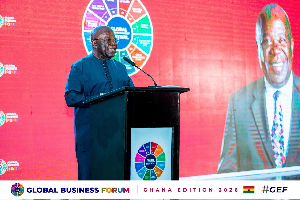
 Samuel E. Jonah is the Executive Chairman of Jonah Capital
Samuel E. Jonah, businessman and Executive Chairman of Jonah Capital, has cautioned that recurring xenophobic attacks against African nationals in South Africa could undermine efforts to deepen economic integration across the continent.
Speaking at the Global Business Forum on August 28, 2026, he said the attacks should not be viewed as isolated incidents, as they could damage trade, investment and the free movement of Africans across the continent.
“They are a dagger in our continental integration,” he stated.
According to him, the success of the African Continental Free Trade Area (AfCFTA) depends not only on trade agreements but also on Africans being able to safely live, work and do business in other African countries.
“The African Continental Free Trade Area cannot survive among citizens who are not free to trade, to work and to live among one another in safety,” he said.
Raw gold export ban may raise costs – Chamber of Mines
He warned that continued attacks could provoke retaliation against South African businesses and nationals operating in other African countries, potentially weakening investor confidence and cross-border business.
During his speech, Sir Jonah called on African governments to protect businesses and workers regardless of their nationality and ensure that investors operating across borders are treated fairly.
He also noted that Africa’s economic integration must go beyond signing agreements, stressing the need for practical measures such as efficient ports, reliable power, fair regulation and competitive business environments.
Jonah cautioned African countries against relying solely on patriotism to promote local businesses, arguing that economies must become competitive enough to attract and retain investment.
“Sentiment is dangerous, not a strategy,” he said.
His comments come amid renewed concerns over anti-immigrant protests and attacks in South Africa.
Jonah urged African leaders and the private sector to strengthen cooperation and create an environment where African capital, businesses and workers can move safely across borders.
DR/MA

Copyright © 1994 - 2026 GhanaWeb. All rights reserved.










