



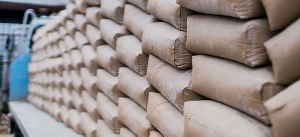
 File photo of cement bags
The Ghana Cement Manufacturers Association has attributed the recent pressure on cement prices partly to delays in the discharge of raw materials at the ports, saying the problem is adding to production costs.
Chief Executive Officer of the Association, Dr George Dawson-Ahmoah, said cement manufacturers have been facing delays in getting raw materials discharged at the ports, with some vessels reportedly spending about 30 days or more at the anchorage.
President Mahama commends GoldBod over GH¢896.5 million profit
His comments come amid renewed discussions over cement prices in Ghana, with concerns from consumers and businesses about the rising cost of the building material.
Speaking in an interview on TV3 on Friday, September 11, 2026, he said the main challenge was the limited availability of berths at the ports rather than dredging.
“The concern of the manufacturer is simple. There have been delays in the discharge of raw materials at the ports from January to this,” he said.
He explained that vessels carrying raw materials for cement production are kept at the anchorage outside the port for extended periods because of the limited number of berths available for discharge.
“The vessels that are coming with raw materials for the production of cement are kept at the anchorage, that is outside the ports, on the sea for a very long time. And we are talking about now about 30 days and even beyond,” Dr Dawson-Ahmoah said.
According to him, the number of berths available for vessels to discharge their cargo has reduced significantly, creating a queue and increasing the cost of importing raw materials.
“The number of berths used to be five, seven berths. We had previously had about five berths that vessels can actually stop and do the discharge. Now it’s reduced to two,” he said.
He stressed that the issue was not mainly about dredging but the availability of berths to handle the volume of vessels arriving with raw materials.
“It is not about, seriously, about the dredging. We are talking about the availability of berths where vessels can be there to discharge,” he stressed.
Dr Dawson-Ahmoah also sought to clarify that cement manufacturers are not pleased with increasing cement prices but are being forced to deal with additional costs arising from challenges in the supply chain.
“I want to make it clear and authoritatively that cement manufacturers are not happy with cement prices, increase in cement prices. They are not at all excited when it comes to increasing prices,” he noted.
He said the additional time vessels spend waiting to discharge translates into extra costs, which eventually affect the cost of producing cement.
“The unavailability of berths, the inadequacy of berths, that is not getting enough berths to discharge regularly, to reduce the delay in the queue of this type of raw material, is a cost added to the production cost,” he said.
The cement manufacturers have welcomed the government’s decision to engage stakeholders over the challenges at the ports, particularly the efforts by the Ministry of Trade, Agribusiness and Industry to understand the concerns of manufacturers.
Dr Dawson-Ahmoah said the association was encouraged by the government’s intervention and expressed confidence that discussions with the relevant authorities could help address the bottlenecks affecting the industry.
ANAS/MA
AI Adoption: Businesses must solve real problems, not chase trends – Carlos Amoako

Copyright © 1994 - 2026 GhanaWeb. All rights reserved.










