



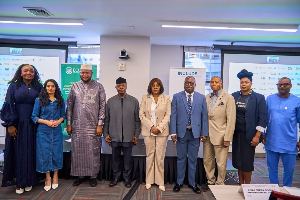
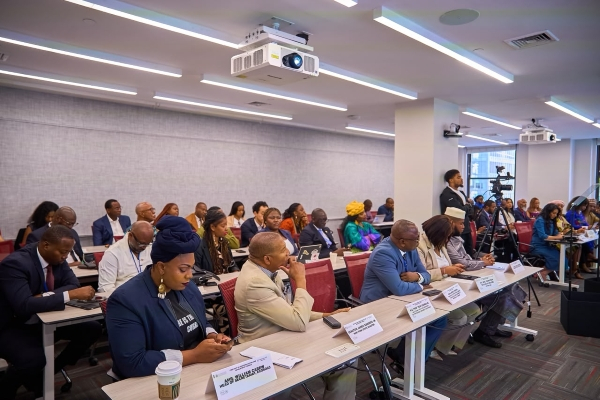
 Seidu Issifu and some dignitaries at the conference
Ghana has called for a fundamental shift in Africa’s engagement with its diaspora—from a relationship centred primarily on remittances to a structured development partnership anchored in investment, knowledge exchange, technology transfer and shared prosperity.
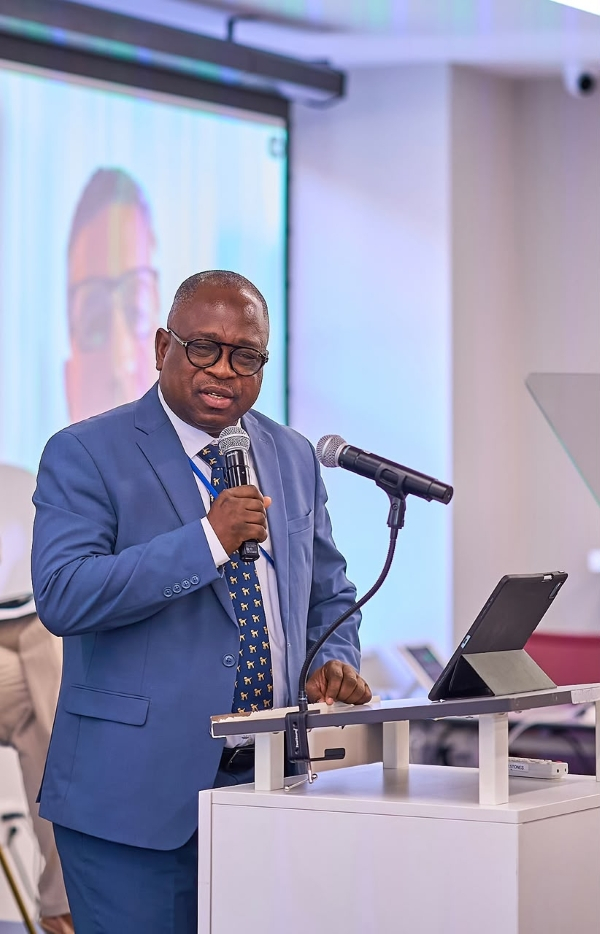
The call was made by the Minister of State for Climate Change and Sustainability, Seidu Issifu, during a high-level fireside chat on “Diaspora Capital and Development Finance: Harnessing Diaspora Resources for Africa’s Transformation and Inclusive Development.”
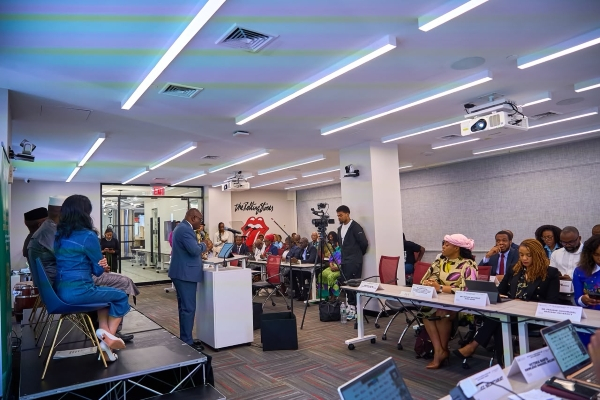
The engagement, organised by the African Union Economic, Social and Cultural Council (AU-ECOSOCC) on diaspora capital and development finance, was held on Madison Avenue in New York on the margins of the 81st Session of the United Nations General Assembly (UNGA81).
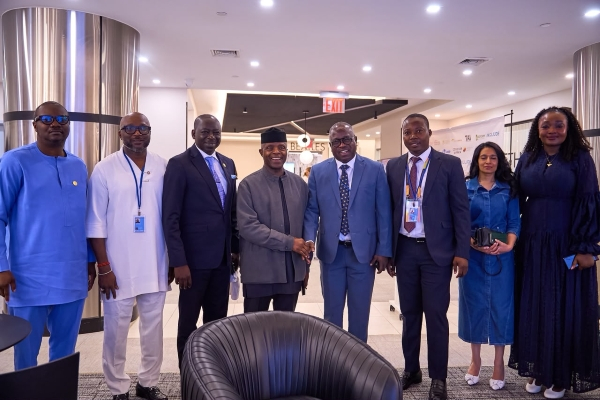
The event brought together senior African leaders, policymakers, civil society representatives, development partners and members of the African diaspora. Among the distinguished participants were former Vice President of Nigeria, Professor Yemi Osinbajo; AU Commissioner for Economic Development, Trade, Tourism, Industry and Minerals, Francisca Tatchouop Belobe; New York State Senator James Sanders Jr and the Presiding Officer of AU-ECOSOCC, Louis Sissoko.
Addressing the gathering, Issifu acknowledged the vital contribution of remittances to household welfare, education, healthcare and economic resilience across Africa. He stressed, however, that the contribution of Africans living abroad extends far beyond financial transfers.
“The African diaspora is much more than a source of remittances. It is a reservoir of investment capital, knowledge, technology, professional expertise, entrepreneurship, networks and global influence,” the Minister stated.
He called for Africa to move “from remittances to relationships, from individual transfers to structured investment, and from goodwill to credible institutions” capable of attracting and protecting diaspora capital.
According to the Minister, Africa’s climate transition presents an important opportunity for diaspora participation. Investments in renewable energy, climate-smart agriculture, resilient infrastructure, circular economies, sustainable transport and green industries could simultaneously address climate risks, create employment and generate sustainable financial returns.
He emphasised that governments must establish the necessary “trust architecture” by developing credible and bankable projects, providing transparent information, strengthening accountability, ensuring predictable regulatory systems and creating investment vehicles accessible to diaspora investors at different levels.
“Patriotism may open the door, but confidence, transparency and returns will sustain investment,” he said, cautioning that appeals to national identity alone would not be sufficient to mobilise long-term diaspora capital.
Issifu also highlighted the non-financial value of the diaspora. African professionals working in engineering, healthcare, technology, finance and other sectors possess expertise and global networks that can support African institutions, mentor entrepreneurs, transfer technology and connect local enterprises to international markets.
In this regard, he welcomed the proposed African-Diaspora Investment Corridor, describing it as a potential bridge between credible investment opportunities in Africa and the resources of Africans abroad. He proposed that the initiative should include national focal points, investment-facilitation services, safeguards, transparent project information and clear accountability mechanisms.
The Minister further urged stakeholders to ensure that diaspora investment contributes to inclusive development by reaching beyond major corporations and capital cities. Such investments, he said, should create opportunities for young people, women-led enterprises, farmers, local innovators and underserved communities.
“Our message is simple: Africa should not relate to its diaspora only through nostalgia. We must build a modern development partnership based on trust, opportunity and shared prosperity,” he declared.
Reaffirming Ghana’s commitment to the African Union’s Agenda 2063, Hon. Issifu said the country was prepared to collaborate with AU-ECOSOCC, African Union Member States, civil society organisations, financial institutions and diaspora communities to translate the vision into practical investment and knowledge-exchange mechanisms.
He concluded with a strong reminder of the diaspora’s place in Africa’s development:
“The African diaspora is not outside Africa’s development story. It is part of Africa’s present, and it must be a strategic partner in Africa’s future.”
See some of the pictures below:
FULL FIGHT | Theo Kpakpo Allotey vs Facundo David Garcia – Every Round

Copyright © 1994 - 2026 GhanaWeb. All rights reserved.










