



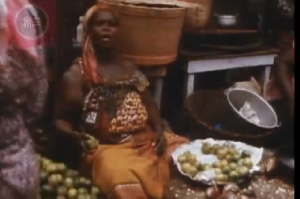
 A file photo of a Ghanaian trader from 1971
Decades before shopping malls and retail centers reshaped Ghana’s capital, the country’s economy was sustained by an indomitable force: the market women of Accra.
Resurfaced archival footage, excerpted from the 1971 documentary Fear Woman, offers a vivid glimpse into their daily operations and immense societal influence during a period of national transformation.
These women were more than traders; they were community leaders and economic anchors whose resilience and enterprise powered Ghana’s development in the years following independence.
As the capital of one of the first sub-Saharan African nations to win its independence, Accra’s markets served as the swirling center of commerce.
In a video posted on X sighted by GhanaWeb on Saturday September 26, 2026, it illustrates how market women dominated the retail landscape entirely.
From bulk staples like onions and tomatoes to manufactured goods and household items, women managed virtually every facet of the supply chain.
Balancing heavy loads gracefully on their heads, vendors navigated bustling streets alongside traditional transport vehicles bearing striking slogans like "Fear Woman to Save Your Life".
Beyond their mastery of commerce, Accra's market women understood a vital truth: politics directly controlled market profits.
Recognizing that governance dictated their financial well-being, children's education, and household security, these women actively engaged in the political sphere.
They were far from passive observers, as they aligned with political parties, mobilized heavily for elections, and did not hesitate to take direct action when policies threatened their livelihoods.
A prominent example highlighted in the historical record includes mass street protests organized by market groups opposing new local council billing systems.
Despite their formidable economic presence, archival accounts noted that a lack of formal education often stood as a hurdle, prompting leaders and traders alike to advocate fiercely for empowerment and greater administrative backing to maximize their societal impact. Footage showing Accra’s market women in 1971, the women at the heart of the capital’s retail trade whose influence made them a force to be reckoned with, excerpted from Fear Woman (1971). pic.twitter.com/uOw9KNkXBO
Today, this archival window into 1971 serves as a timeless reminder that Ghana's commercial foundation and political consciousness were built, in large part, on the shoulders of these resilient entrepreneurs.
Watch the video below
ANAS/EB

Copyright © 1994 - 2026 GhanaWeb. All rights reserved.










