



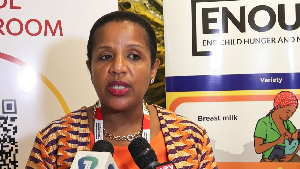
 Carla Denizard is the Regional Leader at World Vision West Africa
Humanitarian organisation, World Vision has praised the Government of Ghana’s decision to fully fund the School Feeding Programme, while calling for a greater focus on locally sourced food to further strengthen the initiative and support farmers.
The organisation believes that linking the school feeding programme more closely to local agricultural production could provide benefits beyond improving access to nutritious meals for schoolchildren.
According to World Vision, sourcing food directly from communities would help create a stronger connection between school feeding and local food systems, while also providing economic opportunities for farmers, particularly women involved in the production of vegetables and other food items.
The call was made during the 7th Micronutrient Forum Global Conference, which brought together stakeholders to discuss nutrition challenges and possible interventions amid growing concerns about malnutrition among children and families.
The conference was held under the theme, “Nutrition at the Frontiers of a Changing Environment”, with discussions focusing on the need for sustainable approaches to improving nutrition and food security.
Ghana’s School Feeding Programme, which was introduced to provide children in public basic schools with nutritious meals while encouraging school attendance, has historically depended on government funding.
Speaking to the media on the sidelines of the conference, Carla Denizard, Regional Leader at World Vision West Africa, said the programme was being implemented well but could have a wider impact if it was integrated with local agricultural production.
“I think that the school feeding programme is being implemented very well. I think that what we need to do is we need to integrate it so that the home meals are grown locally so that we improve agricultural production, we improve food security, so all the food that is sourced for the school meals comes right from the community,” she noted.
She explained that such an approach would allow the school feeding programme to serve as a source of income for local farmers and other members of the communities involved in food production.
“That way you see that farmers are benefiting, the mothers are producing the vegetables. That way you’re improving the livelihoods of all the members in the community while you’re also enhancing the nutrition of the children,” she added.
World Vision’s position suggests that the school feeding programme could play a broader role in addressing some of the challenges facing Ghana’s food and nutrition systems.
By purchasing food from local producers, the programme could create a reliable market for farmers while ensuring that resources allocated to feeding schoolchildren also circulate within communities.
The approach could also provide opportunities for women involved in small-scale farming and food production to participate more directly in the supply chain.
Foundries, Machines and Jet Engines: Ghana’s untapped engineering potential
AK/AM

Copyright © 1994 - 2026 GhanaWeb. All rights reserved.










