



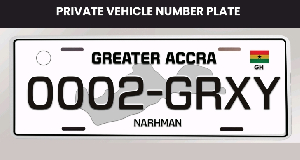
 The pilot is also intended to support the modernisation of Ghana’s vehicle registration system
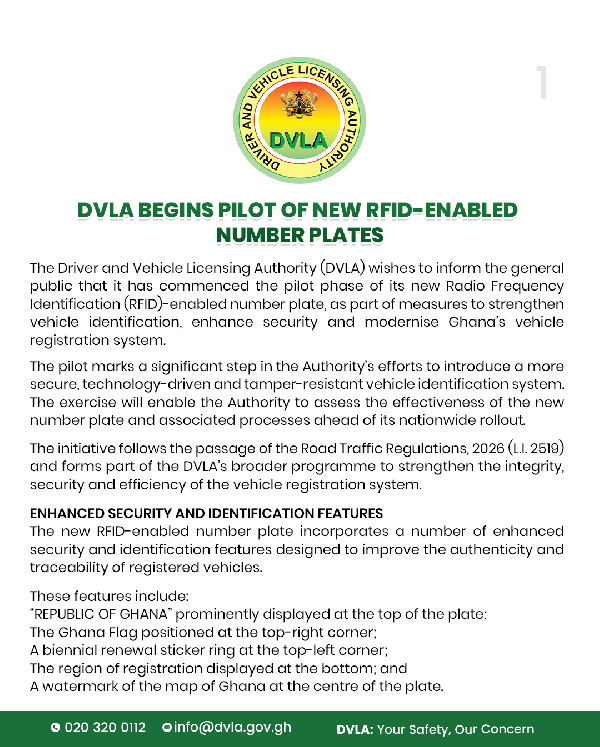
The Driver and Vehicle Licensing Authority (DVLA) has begun piloting new Radio Frequency Identification (RFID)-enabled number plates as Ghana moves towards a new vehicle registration and identification system.
The new plates introduce several changes to the current format, including the removal of the year of registration, a new registration number structure and additional security features.
The pilot forms part of the DVLA’s efforts to strengthen vehicle identification and security while modernising the vehicle registration system ahead of a planned nationwide rollout.
GRA wins US$393 million tax claim against Tullow Ghana
In a statement issued on Tuesday, September 29, 2026, the DVLA said the pilot would allow it to assess the effectiveness of the new number plates and the processes associated with their issuance.
“The pilot marks a significant step in the Authority’s efforts to introduce a more secure, technology-driven and tamper-resistant vehicle identification system,” the DVLA said.
1. Year of registration removed
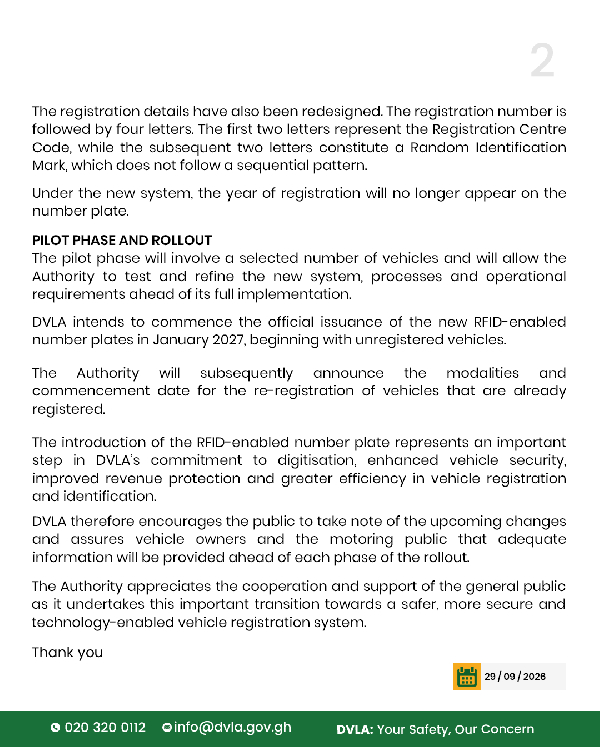
Under the new system, the year in which a vehicle was registered will no longer be displayed on the number plate.
2. New registration format
The registration details have also been redesigned.
The registration number will be followed by four letters. The first two letters will represent the Registration Centre Code, while the next two will constitute a Random Identification Mark.
The DVLA said the Random Identification Mark will not follow a sequential pattern.
3. New security features
The RFID-enabled plates will include additional features intended to improve the authenticity and traceability of registered vehicles.
“REPUBLIC OF GHANA” will be prominently displayed at the top of the plate, while the Ghana flag will appear at the top-right corner.
A biennial renewal sticker ring will be placed at the top-left corner, with the region of registration displayed at the bottom.
A watermark of the map of Ghana will also appear at the centre of the plate.
4. RFID technology
The new plates will be RFID-enabled as part of measures to improve vehicle identification and security.
The initiative follows the passage of the Road Traffic Regulations, 2026 (L.I. 2519), and forms part of the DVLA’s broader programme to improve the integrity, security and efficiency of the vehicle registration system.
5. New plates to be issued from January 2027
The DVLA plans to begin the official issuance of the new RFID-enabled number plates in January 2027, starting with unregistered vehicles.
It said the modalities and commencement date for the re-registration of vehicles that are already registered would be announced later.
“The pilot phase will involve a selected number of vehicles and will allow the Authority to test and refine the new system, processes and operational requirements ahead of its full implementation,” the DVLA said.
The Authority said the new system is expected to support “digitisation, enhanced vehicle security, improved revenue protection and greater efficiency in vehicle registration and identification.”
The DVLA has urged vehicle owners and other road users to take note of the changes, assuring them that “adequate information will be provided ahead of each phase of the rollout.”
The Authority also appealed for public cooperation as it transitions to what it described as a “safer, more secure and technology-enabled vehicle registration system.”
MA
Inside Ghana’s Abandoned Engineering Powerhouse: What Went Wrong?

Copyright © 1994 - 2026 GhanaWeb. All rights reserved.










