



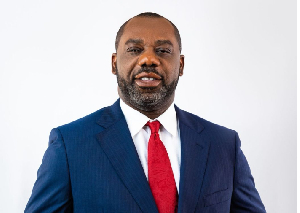
 Dr Matthew Opoku Prempeh is a former Minister of Education
Former Education and Energy Minister, Dr Matthew Opoku Prempeh, has called for a fundamental rethink of Ghana’s development strategy, arguing that education, energy and sustainability should be treated as interconnected pillars of economic transformation.
Dr Prempeh made the call on Wednesday, 7 October 2026, at a public lecture at Coventry University held under the theme, “Education, Energy and Sustainable Development: Preparing Future Leaders for Africa’s Transformation.”
The engagement brought together academics, students, policymakers and other stakeholders to discuss Africa’s development prospects and the leadership required to advance sustainable transformation.
He argued that the three sectors are closely connected: education develops citizens’ capabilities, energy provides the infrastructure for production, and sustainability helps preserve development gains over time.
His remarks focused on the need to move beyond isolated policy interventions and build a framework that links human-capital development, productivity, energy security and institutional effectiveness.
Education must solve problems, not merely produce degrees
Dr Prempeh challenged policymakers, educators and young Africans to reconsider the purpose of education, asking: “What problem will you solve rather than the degree you hold?”
He argued that education should build practical capabilities, equipping people with the knowledge, skills and competencies needed to solve real-world problems and contribute to economic production.
He said Ghana should therefore place greater emphasis on training, upskilling and skills development alongside conventional academic qualifications.
In his view, degrees remain important, but qualifications should ultimately translate into productive capabilities that respond to the needs of industry and society.
Energy as an engine of production
Dr Prempeh placed reliable and affordable energy at the centre of Ghana’s economic transformation.
He argued that electricity should be regarded not only as a public service but also as productive infrastructure supporting businesses, industries, education and communities.
He noted that about 11 percent of Ghana’s landscape still lacks access to electricity, with deprived communities in areas including the Afram Plains, the Volta Region and northern Ghana facing significant challenges.
He linked unequal electricity access to unequal economic opportunity, arguing that underserved communities can struggle to participate fully in productive activities when reliable power is unavailable.
The broader policy implication of his argument is that electricity expansion should be assessed not only by national coverage but also by whether energy infrastructure is reaching communities where it can unlock economic activity and improve livelihoods.
A development model suited to African realities
Another central argument was that African countries should develop approaches that reflect their own social, economic, institutional and resource conditions rather than simply reproduce development models associated with Europe or other regions.
Dr Prempeh referred to this as a “Just Approach” and cautioned against treating development as a “photocopy” of Europe’s historical experience.
He called instead for policies that respond directly to African circumstances and aspirations, particularly in education, energy, sustainability and economic development.
From promises to measurable results
Dr Prempeh also highlighted the gap that can arise between political promises and actual outcomes.
He noted that while promises can be made by anyone, responsibility for delivery ultimately rests with government and state institutions.
His remarks placed implementation capacity at the centre of effective governance. The emphasis, therefore, should be not only on announcing policies but also on ensuring that institutions have the capacity to turn those policies into measurable improvements for citizens through inclusion, technology, stronger institutions and effective community development.
Natural resources as a platform for development
Dr Prempeh argued that Ghana and other African countries should rethink the role of natural resources in development.
Rather than allowing mineral, oil, agricultural and other resources to reinforce dependence on the extraction and export of raw materials, he said they should be used to build productive capacity, human capital and stronger institutions.
He pointed to technology, institutional development and human-capital formation as ways of converting natural-resource potential into wider economic opportunities.
This framing shifts attention from the mere availability of resources to how effectively countries use them to build long-term productive capacity.
Opportunity must be matched with capability
Dr Prempeh further stressed that expanding access to education, electricity and other public services should not be the final measure of development.
The more important question, he suggested, is what citizens are able to do with those opportunities.
This capability-focused perspective means that policies to expand access should also be connected to employment, entrepreneurship, innovation, productivity and improved living standards. Access becomes meaningful when it enables individuals and communities to participate more fully in economic and social development.
An integrated policy direction for Ghana
The central proposition from the lecture was that education, energy and sustainability should reinforce one another rather than operate in separate policy silos.
Education can develop the skills required by the economy; energy can provide the productive infrastructure needed to deploy those skills; and sustainability can help ensure that gains are maintained over time.
Governance and institutional capacity would provide the mechanism for converting these priorities into measurable outcomes.
From this perspective, Ghana’s development debate should move beyond asking how many people have received access to education or electricity and also examine whether that access is producing stronger capabilities, productive communities, competitive businesses and sustainable economic opportunities.
Taken together, Dr Prempeh’s remarks presented development as a connected system in which human-capital development, energy infrastructure, sustainability and effective institutions work together.
The approach, if translated into coherent policy and effective implementation, could provide a basis for a longer-term national transformation agenda.
THE LOWDOWN: GES PRO Speaks on SHS Placement Crisis and Teachers’ Strike

Copyright © 1994 - 2026 GhanaWeb. All rights reserved.










