



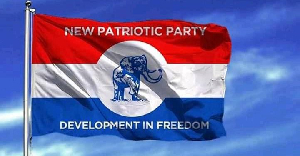
 NPP flag
The New Patriotic Party (NPP) has directed prospective parliamentary aspirants, their agents and supporters to immediately halt all campaign activities, warning that members who defy the order could face disciplinary action that may affect their eligibility to contest.
The directive, announced in a statement dated October 11, 2026, and signed by the party’s General Secretary, Justin Kodua Frimpong, follows complaints that some party members with parliamentary ambitions have already begun campaigning in various constituencies.
The party says the activities violate its regulations and Code of Conduct, arguing that premature campaigning could create an uneven playing field and undermine the unity and discipline required for its internal electoral processes.
But what exactly does the directive mean for prospective candidates, party executives and supporters? Here are the key issues explained.
1. Why has the NPP issued the directive?
According to the party, its leadership has received numerous complaints that some prospective parliamentary candidates have started campaigning before the official timetable and guidelines for the parliamentary selection process have been announced.
The NPP considers such activities contrary to its internal regulations and Code of Conduct.
In its statement, the party warned that early campaigning could give some aspirants an unfair advantage over others, potentially affecting the fairness of the process and creating divisions among members.
“Such conduct is contrary to the Party's regulations and Code of Conduct. It creates an uneven playing field and undermines the unity and discipline on which the Party's success depends,” the statement said.
The directive is therefore intended to bring such activities to a halt while the party prepares to announce the official timetable and guidelines governing its parliamentary processes.
However, the statement does not identify the aspirants against whom complaints have been made or specify the constituencies where the alleged premature campaigns are taking place.
2. What activities are banned?
The NPP has directed all prospective parliamentary aspirants, their agents and supporters to cease every form of campaign activity with immediate effect.
The prohibition covers several activities commonly associated with efforts to build support ahead of party primaries.
Posters, billboards and banners
Aspirants are prohibited from mounting posters, billboards, banners and other branded materials intended to promote their parliamentary ambitions.
This means prospective candidates cannot continue using such promotional materials to advertise their candidacies while the directive remains in force.
Rallies, meetings and constituency tours
The party has also banned the organisation of rallies, meetings with polling station executives and constituency tours for the purpose of soliciting support.
These activities are often used by aspiring parliamentary candidates to engage party delegates, introduce themselves to members and build support ahead of internal elections.
Under the new directive, such engagements are prohibited when they are organised to promote a prospective candidacy or solicit votes.
Distribution of items and inducements
The NPP has further prohibited aspirants from distributing items or offering other inducements to delegates and party members.
The statement does not list the specific items or forms of inducement covered by the directive. However, it makes clear that distributing items as part of efforts to win support is among the activities that must stop.
Paid media and social media advertisements
Paid media campaigns and social media advertisements promoting a parliamentary aspirant are also prohibited.
The directive specifically names Facebook, X and Instagram in its restrictions on the promotion of aspirants by party officers and structures.
The broader ban on campaign activities also covers paid advertising intended to promote a prospective candidate.
3. Does the ban apply only to aspirants?
No. The directive expressly extends beyond prospective parliamentary candidates to include their agents and supporters.
This means aspirants cannot continue prohibited campaign activities through intermediaries while personally claiming to have complied with the order.
The party has also issued a separate warning to its officers and structures, making it clear that those responsible for administering party affairs are not permitted to facilitate premature campaigns.
The directive covers party officers at the polling station, electoral area, constituency, regional and national levels, as well as TESCON.
TESCON is the NPP's Tertiary Students Confederacy, which operates within tertiary educational institutions.
These party structures are expected to comply with the directive rather than use their positions or platforms to promote prospective candidates before the official process begins.
4. What are party officers prohibited from doing?
The NPP has specifically barred party officers at all levels and TESCON from posting parliamentary aspirants on social media platforms or enabling what it describes as premature parliamentary aspirant activities.
The statement names Facebook, X and Instagram as examples of the platforms covered.
The restriction is significant because party executives and local organisers can play an influential role in shaping support for candidates within constituencies.
By prohibiting the promotion of aspirants through party structures and social media, the NPP leadership appears intent on limiting the use of party positions and platforms to advance individual candidacies before the official guidelines are released.
The statement, however, does not provide a detailed list of every online interaction that would constitute a violation. It specifically prohibits party officers from posting aspirants and facilitating premature campaign activities.
5. What happens if an aspirant ignores the directive?
The party has warned that anyone who fails to comply will be dealt with in accordance with its disciplinary procedures.
More importantly, it has cautioned that such action could affect an aspirant's eligibility to contest.
“Any person who fails to comply will be dealt with in accordance with the Party's disciplinary procedures, which may affect their eligibility to contest,” the statement said.
This warning places prospective candidates on notice that continuing campaign activities despite the directive could have consequences beyond a reprimand.
However, the NPP has not specified the exact sanctions that would apply to offenders. The statement does not confirm that every violation would automatically result in disqualification.
The precise consequences would depend on the party's applicable regulations and disciplinary procedures.
6. When will the NPP parliamentary primaries take place?
The party has not announced a date for its parliamentary primaries in the October 11 statement.
Instead, it said the timetable and guidelines for the parliamentary processes would be announced in due course.
This means prospective candidates and their supporters will have to await further communication from the party before proceeding with activities governed by the official selection timetable and guidelines.
The statement does not provide a specific date for the release of those guidelines or indicate how long the restrictions will remain in place.
Until further instructions are issued, the party has directed aspirants, their agents and supporters to stop the campaign activities covered by the announcement.
7. What is expected of constituency and regional executives?
The NPP has tasked constituency and regional executives with ensuring strict compliance within their respective jurisdictions.
These executives are expected to ensure that the directive is observed across the party's structures and that prohibited campaign activities do not continue at the local level.
Their responsibilities are particularly important because much of the activity associated with parliamentary ambitions takes place within constituencies, where prospective candidates seek to engage delegates and establish support networks.
The directive does not set out a separate enforcement procedure for constituency and regional executives. However, it expressly assigns them responsibility for ensuring compliance.
8. Does the directive mean the NPP has cancelled its parliamentary primaries?
No. The statement does not announce the cancellation of the party's parliamentary primaries.
Rather, it directs prospective aspirants to suspend their campaign activities while the party prepares to issue the timetable and guidelines for its parliamentary processes.
The announcement should therefore be understood as a restriction on premature campaigning, not a cancellation of the internal electoral process.
The party has not provided further details in the statement on when the selection process will begin or how the eventual primaries will be conducted.
9. What does the directive mean for prospective candidates?
For prospective parliamentary candidates, the immediate implication is that efforts to promote their candidacies must stop.
Aspirants will have to suspend activities such as mounting promotional materials, organising campaign rallies and constituency tours, distributing items to delegates and running paid advertisements promoting their ambitions.
Their agents and supporters are also expected to comply.
The directive additionally warns party officers against using their official positions or social media platforms to promote aspirants before the party's guidelines are announced.
Failure to comply could expose aspirants and other persons involved to disciplinary procedures, with possible implications for eligibility to contest.
For party members, the announcement reinforces the leadership's position that the parliamentary selection process must be conducted in accordance with the party's rules and official timetable.
Conclusion
The NPP's October 11 directive marks a firm attempt by the party leadership to stop what it describes as premature campaigning by prospective parliamentary aspirants.
By extending the restrictions to candidates, their agents, supporters and party officers, the leadership has made clear that the prohibition is not limited to the individuals seeking to contest.
The party has warned of disciplinary consequences for non-compliance, including possible effects on eligibility to contest, while leaving the exact sanctions and timetable for the parliamentary selection process to be communicated later.
For now, the message to prospective aspirants is clear: all campaign activities covered by the directive must stop immediately, and party members must wait for the official timetable and guidelines before proceeding.
EA

Copyright © 1994 - 2026 GhanaWeb. All rights reserved.










