



 A file photo of an empty court room
The Judicial Service has introduced measures to stop lawyers and litigants from wasting money on court visits when sittings are cancelled or cannot take place.
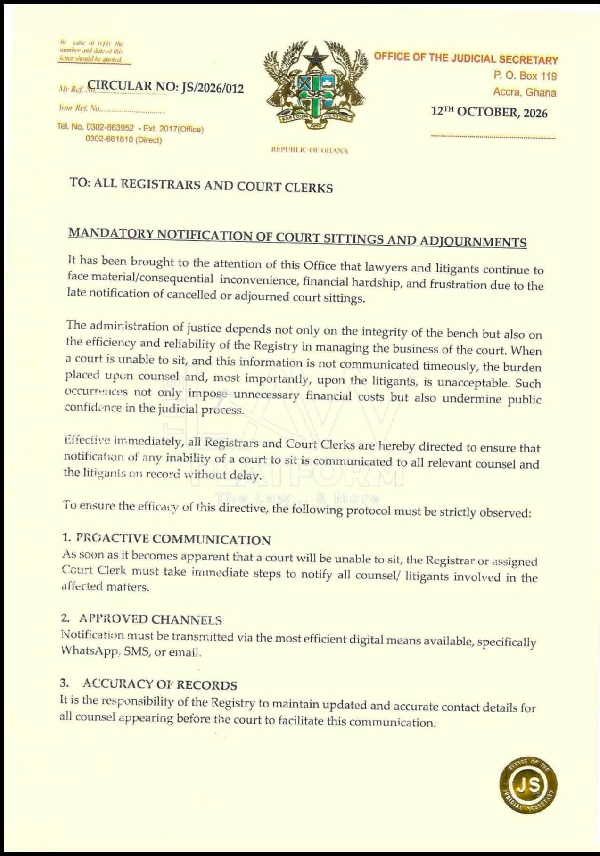
Under a new directive, court registrars and clerks must promptly inform lawyers and litigants whenever a court is unable to sit, to prevent them from making unnecessary trips and incurring avoidable costs.
Today in History: Ato Essien jailed 15 years over GH¢90m repayment default
The directive follows concerns that late notices of cancelled or adjourned sittings have caused financial hardship, inconvenience and frustration for people involved in court cases.
In a circular signed by Judicial Secretary, Musah Ahmed, on October 12, 2026, all registrars and court clerks have been instructed to notify lawyers and litigants as soon as it becomes clear that a court will not sit.
The notice must be sent through the most efficient digital channels available, including WhatsApp, SMS or email.
The circular stressed that late communication places an unfair burden on lawyers and, particularly, litigants who spend money travelling to court only to find that their cases will not be heard.
“The administration of justice depends not only on the integrity of the bench but also on the efficiency and reliability of the Registry in managing the business of the court,” the circular stated.
To ensure that the notices reach the right people, court registries have also been directed to keep accurate and updated contact details for all lawyers appearing before them.
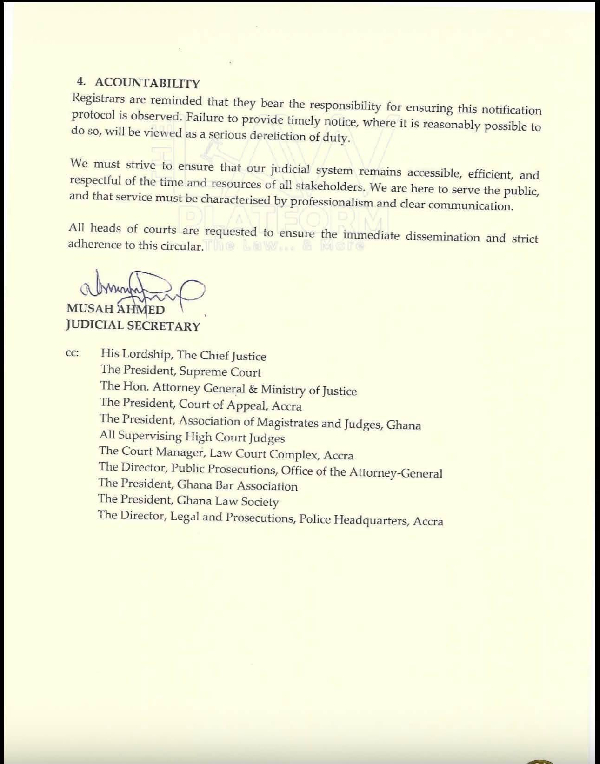
The Judicial Service has warned that registrars who fail to provide timely notice when it is reasonably possible to do so will face accountability for their actions.
“Failure to provide timely notice, where it is reasonably possible to do so, will be viewed as a serious dereliction of duty,” the circular stated.
Lawyers seek 48-hour order for Mahama to appoint ex-CJ to Council of State
Heads of courts have been asked to ensure the immediate circulation and strict implementation of the directive.
The Judicial Service said the measures are intended to reduce avoidable costs, improve communication and ensure that the justice system respects the time and resources of lawyers and litigants.
MAG/VPO
Inside Ghana’s Abandoned Engineering Powerhouse: What Went Wrong?

Copyright © 1994 - 2026 GhanaWeb. All rights reserved.










