



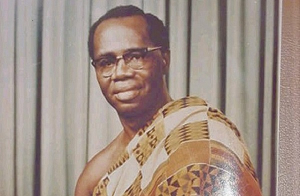
 Formation of the UP in Ghana
Ghana’s political history took a significant turn on October 13, 1957, when opposition parties came together to form the United Party (UP), creating a common political front against the government of the country’s first prime minister, Dr. Kwame Nkrumah.
The move brought together several opposition groups under the leadership of Dr. Kofi Abrefa Busia, who would later become Prime Minister of Ghana. The formation of the UP marked an important chapter in the country’s post-independence political struggle and helped shape the political tradition from which the modern New Patriotic Party (NPP) emerged.
The merger followed the passage of the Avoidance of Discrimination Act, 1957, which prohibited political organizations formed on regional, ethnic, or religious lines. The law, introduced by Nkrumah’s government, changed Ghana’s political landscape by restricting the activities of parties whose identities were tied to particular communities or interests.
Among the groups associated with the opposition coalition were the Northern People’s Party, the National Liberation Movement (NLM), the Muslim Association Party, the Togoland Congress, the Anlo Youth Organisation, and Ga Shifimo Kpee. Their coming together reflected an attempt to consolidate opposition forces under a broader political organization capable of challenging the ruling Convention People’s Party (CPP).
At the center of the new political arrangement was Busia, a prominent politician and academic who became one of Nkrumah’s most formidable political opponents. The UP provided a platform for different opposition interests to operate under a common banner at a time when the CPP was consolidating its influence over Ghana’s political institutions.
The formation of the party unfolded against a tense political backdrop. While Nkrumah’s government defended the legislation as a measure against divisive, sectional politics, opponents viewed the restrictions as a threat to political pluralism and their ability to organize freely.
The development formed part of a wider struggle over the direction of Ghana’s young democracy. Having attained independence on March 6, 1957, the country was still defining the relationship between national unity, political competition, and the rights of opposition groups.
The United Party subsequently became an important vehicle for opposition politics. Its political tradition is widely associated with the lineage that eventually produced the New Patriotic Party, established in 1992 following the return to multiparty constitutional rule.
Looking back, the formation of the UP represents more than the merger of several political organizations. It captures an enduring question in Ghanaian politics: how can a country pursue national unity while protecting the right of citizens with different political views and interests to organize, compete, and hold their government accountable?
More than six decades later, the legacy of the United Party remains part of Ghana’s political conversation, particularly in discussions about the origins of the NPP, the evolution of opposition politics, and the challenges of sustaining a competitive multiparty democracy.
Editorial accuracy note: October 13, 1957, is cited in historical accounts as the date of the United Party’s formation, although some accounts place its formal inauguration in Accra on November 3, 1957.
The Avoidance of Discrimination Act, 1957, came into effect on December 31, 1957, after the date associated with the UP’s formation. The party later became a major opposition force but ceased to operate as a legal opposition party when Ghana became a one-party state in 1964. These distinctions are important when documenting the party’s origins and its place in Ghana’s political history.
EA

Copyright © 1994 - 2026 GhanaWeb. All rights reserved.










