



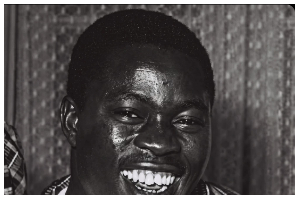
 Krobo Edusei was a close ally of Dr Kwame Nkrumah
One of the most memorable political controversies in Ghana’s First Republic was the infamous “Golden Bed” affair involving Krobo Edusei, a powerful minister and close ally of Ghana’s first President, Dr Kwame Nkrumah.
The controversy, which erupted in 1963, centred on the reported purchase of an expensive luxury bed in London by Edusei’s wife, Victoria Edusei.
Valued at about £3,000 at the time, the bed became a national talking point, raising questions about extravagance among government officials at a time when the country was facing economic challenges.
Watch as Kwame Nkrumah opened Ghana’s first Republican Parliament
Although the bed was not made entirely of gold, its lavish appearance and reported price earned it the nickname “Golden Bed”, turning what might have been a private purchase into a major political controversy.
More than six decades later, the affair remains a notable episode in Ghana’s political history, remembered for the questions it raised about public accountability, the lifestyles of political leaders and the importance of public trust.
Who was Krobo Edusei?
Krobo Edusei was a prominent member of the Convention People’s Party (CPP), the political movement led by Dr Kwame Nkrumah that spearheaded Ghana’s struggle for independence from British colonial rule.
Following independence in 1957, Edusei rose through the ranks of government and occupied several influential ministerial positions. His portfolio included appointments as Minister of the Interior, Minister of Transport and Communications, and Minister of Agriculture.
His proximity to Nkrumah and his position within the ruling party made him one of the influential figures in the administration of the First Republic.
However, his political career would become closely associated with the controversy surrounding his wife’s reported purchase of the luxury bed.
How the £3,000 Golden Bed controversy erupted
In 1963, reports emerged that Victoria Edusei had purchased an expensive bed in London for approximately £3,000, a substantial amount of money at the time.
The item was reportedly richly decorated, and its price quickly attracted public attention. Although it was popularly referred to as the “Golden Bed”, the name did not mean that it was made entirely of solid gold.
The controversy spread beyond the reported purchase itself because of the political position held by her husband.
As a senior minister in Nkrumah’s government, Krobo Edusei was a public figure whose personal and family affairs attracted considerable scrutiny.
The reported expenditure therefore became a subject of wider debate about the lifestyles of government officials and whether those in positions of authority were sufficiently mindful of the economic circumstances of ordinary Ghanaians.
Why the purchase sparked public outrage
The timing of the controversy was significant. Ghana was experiencing economic difficulties, and the cost of the bed prompted questions about how the family of a senior government official could afford such an expensive luxury item.
For critics, the affair became a symbol of perceived extravagance among members of the political establishment.
The controversy also highlighted the expectations placed on public officials, particularly in a young nation that had gained independence only a few years earlier and whose leaders had promised to pursue national development and improve living conditions.
The issue was not simply the price of a piece of furniture. It was also about public perceptions of privilege, accountability and the apparent contrast between the lifestyles of political elites and the economic realities facing many citizens.
Krobo Edusei’s defence
Krobo Edusei maintained that the bed had been purchased with private funds rather than public funds.
The distinction was important because the central concern surrounding the controversy was whether public resources had been used to finance the expensive item.
The available account of the affair does not establish that state funds were used to purchase the bed, nor does it indicate that a court found Edusei guilty of misappropriating public money in connection with the purchase.
Nevertheless, his explanation did little to prevent the incident from becoming a lasting political embarrassment.
A scandal that became part of Ghana’s political history
More than 60 years after it emerged, the Golden Bed affair remains one of the most widely recalled controversies associated with Ghana’s First Republic.
Its enduring significance lies partly in how an individual purchase became a broader debate about political leadership and public accountability.
It also illustrates the challenges governments face in maintaining public confidence when the private lifestyles of political leaders appear disconnected from the conditions of the people they represent.
For Ghana, the Golden Bed controversy remains a historical reminder that public trust depends not only on whether officials misuse public funds, but also on transparency, responsible conduct and sensitivity to the economic circumstances of ordinary citizens.
While the reported purchase alone does not establish financial wrongdoing, its place in Ghana’s political memory shows how quickly a luxury item can become a national symbol of political controversy.
SEE THE VIDEO BELOW
“Ghana Cannot Lower Its Guard” – Counter-Terrorism Chief Warns of Extremism Threats

Copyright © 1994 - 2026 GhanaWeb. All rights reserved.










