


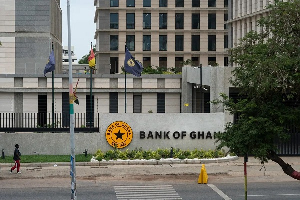
 The Bank of Ghana (BoG) headquarters
The Bank of Ghana (BoG) says Ghana’s inflation rate of 5.2 percent in September 2026 remains at a favourable level despite the recent increase in prices.
According to the Director of Research at the Bank of Ghana, Dr Philip Abradu-Otoo, Ghana’s inflation performance remains encouraging and should not be judged solely by comparing it with that of other African countries.
He explained that some West African countries record lower inflation because their currencies are pegged to the euro, which helps keep prices relatively stable.
Ghana, however, operates a different monetary policy framework, under which the central bank adjusts interest rates to control inflation and maintain price stability.
Oil prices rise above $110 as fresh attacks hit Saudi Arabia
“So we have an inflation-targeting framework of monetary policy, and we use the interest rate tool as the main tool to control inflation,” he explained.
“By and large, our inflation numbers are in very good territory, and we should be happy about that,” he added.
Dr Abradu-Otoo made the remarks at the launch of the Institute of Statistical, Social and Economic Research’s (ISSER) State of the Ghanaian Economy Report 2025 on Tuesday, October 20, 2026.
He also explained that the recent decline in Ghana’s foreign reserves was partly due to disruptions to gold exports caused by the Middle East crisis.
Foreign reserves are assets held by the central bank, mainly in foreign currencies, to support international payments and help protect the economy against financial shocks.
He said the disruptions slowed the accumulation of reserves during the first seven months of the year, forcing the Bank of Ghana to use part of its existing reserves to support trade and other economic activities.
However, he indicated that gold exports resumed in September, raising expectations that the country’s foreign reserves would improve before the end of 2026.
Ghana's economy to hit $128.64 billion in 2026, remain Africa's 8th largest – IMF
On Ghana’s public debt, he clarified that the recent increase in debt figures was not caused by new borrowing.
Instead, he attributed the rise to exchange-rate movements, explaining that the cedi had lost 10.8 per cent of its value since the beginning of the year.
DR/MA
Inside Ghana’s First 950,000-Barrel Sankofa Oil Shipment | Exclusive Tour

Copyright © 1994 - 2026 GhanaWeb. All rights reserved.










