


 Kombat also revealed that the refinery had been unable to file audited financials for six years
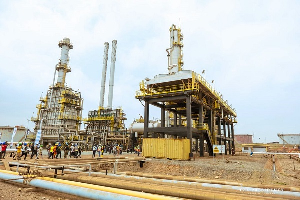
The Tema Oil Refinery (TOR) had accumulated losses of about GH¢10 billion and a debt of approximately US$517 million when the current management took over in January 2025, Managing Director Edmond Kombat has disclosed.
Speaking at the Government Accountability Series on October 26, 2026, Kombat outlined the financial, operational and administrative challenges facing the refinery at the time of the government transition.
He said TOR’s debt had increased from US$300 million in 2016 to approximately US$517 million by January 2025, while the company recorded negative equity of GH¢7.6 billion at the end of 2024.
Kombat also revealed that the refinery had been unable to file audited financial statements for six consecutive years, from 2019 to 2024.
According to the TOR Managing Director, the refinery’s major processing units had been out of operation for several years, leaving the company unable to perform its core refining activities.
He said the Crude Distillation Unit (CDU) had been out of operation since April 2021, while the Residue Fluid Catalytic Cracking (RFCC) Unit had been shut down since 2019.
The units had not received the maintenance required to sustain their operations, he explained.
As a result, TOR had largely resorted to renting out storage space to petroleum service providers instead of carrying out its primary mandate of refining crude oil.
Kombat further disclosed that much of the refinery’s infrastructure had deteriorated or become obsolete, with 18 of its 59 storage tanks out of service. Some of the tanks, he said, had been out of operation since 2004.
GH¢410m owed to GRA, SSNIT and staff-related obligations
The Managing Director said TOR had accumulated significant outstanding obligations to state institutions, employees and other creditors.
He disclosed that the refinery owed the Ghana Revenue Authority (GRA) GH¢200 million and the Social Security and National Insurance Trust (SSNIT) GH¢20 million.
Additionally, TOR had outstanding obligations of GH¢190 million to staff provident funds, retirees and former employees who had resigned.
The company also owed the Electricity Company of Ghana (ECG), Ghana Water Company Limited and other commercial entities, including two state-owned enterprises, the Ghana National Petroleum Corporation (GNPC) and the Volta River Authority (VRA).
Kombat said the refinery had fallen several years behind on statutory payments, while low staff morale, employee departures and divisions within the workforce had compounded its challenges.
He added that more than 300 petitions concerning delayed promotions were awaiting review, with some dating back as far as 10 years.
Kombat also alleged that between 2019 and 2024, TOR sold petroleum products belonging to three third-party service providers, valued at millions of dollars, to raise funds to pay staff salaries without the knowledge of the owners.
The allegation raises questions about the refinery’s financial management during the period and its handling of products held on behalf of other companies.
The Managing Director further claimed that the refinery was on the verge of being sold or leased for US$21 million before the current management took over in January 2025.
He presented the situation as part of the broader financial and operational difficulties confronting the state-owned refinery at the time.
MA

Copyright © 1994 - 2026 GhanaWeb. All rights reserved.










