


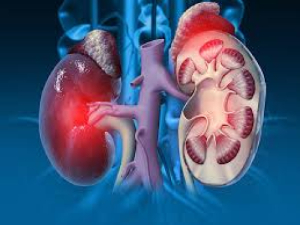
 A file photo of a kidney
A kidney transplant involves placing a healthy kidney in a person whose kidneys can no longer perform their functions properly.
During the operation, the surgeon places the new kidney in the lower part of the abdomen, on either the right or left side.
It is then connected to nearby blood vessels and the bladder to allow blood to flow through it and urine to pass out of the body.
However, one question people may ask is whether doctors remove the damaged kidneys before putting in the new one.
According to research sourced from several reputable health sites, in most cases, the damaged kidneys are left inside the body, even after a successful transplant, and doctors only remove them when there is a medical reason to do so.
Why are the failed kidneys left inside the body?
Most people are born with two kidneys, which help remove waste and excess fluid from the blood. When the kidneys fail because of diseases such as diabetes or high blood pressure, a transplant may be needed.
However, the failure of the kidneys does not automatically mean they must be removed.
Doctors can place the new kidney in the lower abdomen and connect it to the blood vessels and bladder without removing the original kidneys. This avoids exposing the patient to the additional risks of another surgical procedure.
In some cases, the damaged kidneys may also continue to produce small amounts of urine or hormones.
When do doctors remove the damaged kidneys?
Although the original kidneys are usually left in place, doctors may recommend removing one or both if they are causing serious health problems.
These include repeated kidney infections, severe pain, kidney cancer or large cysts that cause complications.
Doctors may also consider removal if the damaged kidneys contribute to high blood pressure that cannot be controlled with treatment.
In some patients, particularly children and people with small bodies, the existing kidneys may take up too much space for the new kidney. In such cases, a surgeon may decide to remove one or both of them.
What happens to the old kidneys after a transplant?
When the damaged kidneys are left inside the body, they may shrink over time. In many cases, they do not interfere with the transplanted kidney.
However, they can sometimes cause problems later, including pain or infections. If this happens, doctors may assess the patient and recommend removing the affected kidney.
The decision depends on the patient's condition and whether the damaged kidneys are causing complications.
Ultimately, a kidney transplant does not usually require the removal of the failed kidneys.
The new kidney can perform the necessary functions without the old ones being taken out, unless there is a specific medical reason for their removal.
Inside Ghana’s First 950,000-Barrel Sankofa Oil Shipment | Exclusive Tour
“We Can’t Adapt to This New Road Technology” | Ghanaians React to TRAFFITECH-GH

Copyright © 1994 - 2026 GhanaWeb. All rights reserved.










