


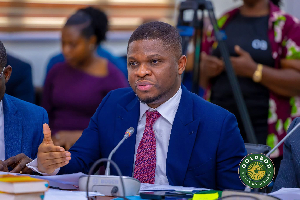
 Sammy Gyamfi is the CEO of Golsbod
The Ghana Gold Board (GoldBod) has begun consultations on a programme to bring artisanal and small-scale miners into the formal financial system.
The move targets a sector that now earns the country more foreign exchange than large-scale mines but has long operated largely outside the banking system.
The Board has engaged the University of Mines and Technology (UMaT) on the proposed Artisanal and Small-Scale Mining (ASM) Formalization and Financing Support Programme, which is scheduled for implementation in 2027. GoldBod’s Deputy Chief Executive Officer, Richard Nunekpeku, led the engagement. The UMaT delegation was headed by its Vice-Chancellor, Professor Bernard Kumi-Boateng.
Nunekpeku said the programme forms part of a broader government intervention aimed at formalizing ASM operations, improving access to structured financing and promoting responsible mining. He stressed the importance of stakeholder input before the proposal goes to Cabinet and Parliament for consideration.
Professor Kumi-Boateng pledged UMaT’s technical expertise to support the programme. GoldBod said further consultations will involve the Minerals Commission, the Ministry of Lands and Natural Resources, the Minerals Income Investment Fund (MIIF), the Environmental Protection Authority (EPA), the Water Resources Commission and other relevant institutions.
The scale of the sector explains the urgency. According to GoldBod, it exported 85.4 tonnes of artisanal and small-scale gold valued at US$11.6 billion between January 1 and October 20, 2026. Over the same period, according to the Board, large-scale mines exported 76 tonnes worth US$11.1 billion, making small-scale miners the country’s biggest gold earners by both volume and value.
Since its establishment, GoldBod has exported about 170 tonnes of ASM gold through formal channels, generating more than US$17 billion in foreign exchange. The Board says its reforms have created 4,866 direct jobs.
Yet most of the sector still operates informally. About 80 per cent of small-scale operations remain informal, restricting their access to finance and to responsible markets. Without credit, many miners rely on informal financiers, outdated equipment and practices that damage water bodies and forest land.
The programme is designed to close that gap. According to GoldBod, it will help artisanal miners become legal, responsible and OECD-compliant operators through regulatory compliance, capacity building, concession viability support, equipment financing and mining services.
GoldBod Chief Executive Sammy Gyamfi, Esq., who first announced the scheme at the 2026 African Minerals Policy Forum, said it would be implemented with the Ministry of Lands and Natural Resources and UMaT, with technical support from South Africa’s Rand Refinery. “Reform will endure only when compliance becomes a pathway to opportunity rather than hardships,” he said.
For the economy, the business case is significant. Formal miners with access to equipment financing and modern technology can recover more gold from the same ore, cut operating costs and reduce environmental damage. More of their output would also flow through official channels. Before GoldBod’s reforms, gold smuggling had been estimated to cost Ghana about US$2.3 billion a year.
The programme builds on earlier formalization efforts. The Responsible Cooperative Mining and Skills Development Programme(rCOMSDEP), approved by Cabinet in July 2025, had launched more than 200 new cooperatives by the end of February 2026. Analysts have noted that formalization without finance is an incomplete reform, and that GoldBod’s core mandate has been price and traceability management rather than development finance.
GoldBod has been moving towards the financing role this year. In April, it began engagements with Better Brands Zimbabwe, the Zimbabwe government’s largest gold-buying agent, on ASM formalisation with a focus on financing and structural support for miners. The new programme is the Board’s most structured step yet in that direction.
Banks say the money is available if the structures are right. Benjamin Nana Kwesi Mensah, an associate in Stanbic Bank’s mining and metals team, said at the West African Mining and Power Exhibition this year that access to financing for small-scale mining can be significantly improved through stronger deal structures. According to the bank, a lack of appetite from banks and investors is often not the real challenge.
UMaT’s participation is expected to strengthen the technical side of the programme, including geological assessment, mine planning and safer extraction methods.
Several key details have yet to be made public. GoldBod has not yet set out the programme’s financing arrangements, detailed eligibility criteria or the mechanisms for monitoring participating miners and enforcing environmental standards. Those details are expected to emerge through the consultation process before the proposal reaches Cabinet.
The scheme will also rely on GoldBod’s wider transparency drive. The Board expects to introduce a blockchain-based gold traceability system before the end of November 2026, which would allow gold from financed operations to be tracked from mine to export

Copyright © 1994 - 2026 GhanaWeb. All rights reserved.










