



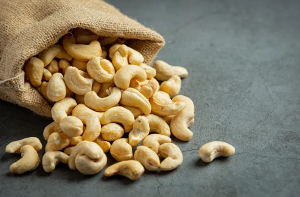
 File photo of raw cashew
Leading Ghanaian cashew processor Usibras has turned to importing semi-processed cashew kernels from neighbouring Côte d’Ivoire to keep its factory operational. The decision comes after soaring domestic farm-gate prices and aggressive foreign buying rendered local raw cashew nut procurement highly uncompetitive.
To sustain factory activity, Usibras has resorted to importing borma kernels, cashew nuts that have been shelled and dried but retain their inner skin, for final peeling, processing and packaging in Ghana. The emergency supply chain pivot underscores a severe operational mismatch between processing infrastructure and raw material availability.
During the last harvest season, Usibras managed to purchase only 6,500 tonnes of raw cashew nuts (RCN). This procurement volume represents a mere 19 per cent of the company’s installed processing capacity of 35,000 tonnes per annum. Operating at less than one-fifth of its potential has placed immense financial strain on the facility, threatening the viability of one of West Africa's largest cashew processing investments.
Unregulated raw exports create uneven playing field
Usibras leadership points to significant regulatory gaps as the primary catalyst for the crisis. Under current trade regulations, raw cashew nuts can be exported from Ghana virtually unrestricted, with traders paying only a nominal levy of GH¢92 per tonne to the Tree Crops Development Authority (TCDA).
This regulatory structure permits foreign buying agents to purchase raw nuts directly from farming communities at aggressive prices. Because foreign buyers export raw materials without value addition, they avoid local operational overheads, power tariffs and labour costs, allowing them to outbid domestic processors who bear the heavy capital expenditure of local manufacturing.
“We want to buy from Ghanaian farmers and process their cashew here in Ghana. But we cannot compete when raw nuts leave the country almost tax-free. Without policies that support local processing, jobs and rural incomes will continue to suffer,”
Job cuts and threat of total market exit in 2027
The economic ramifications of the procurement shortfall have had a direct impact on local employment. Faced with severe underutilisation of its processing capacity, Usibras was forced to reduce its workforce by 50 per cent, from 700 to 350 employees. Company management has warned that further job cuts may become inevitable if conditions in the domestic raw cashew market do not improve.
The potential absence of Usibras from Ghana’s domestic raw cashew nut market in 2027 could result in an estimated US$17 million in lost direct purchasing expenditure. This represents money that would otherwise be injected into cashew-growing communities through purchases from Ghanaian farmers.
Beyond the immediate loss of income for farmers, the withdrawal of such a significant buyer would have wider economic consequences for rural communities. Local traders, transport operators, service providers and other businesses that depend on the cashew value chain would also experience reduced economic activity.
Usibras has emphasised that its position should not be interpreted as a withdrawal of support for Ghanaian farmers. Rather, it reflects prevailing market conditions and regulatory imbalances that have made the domestic procurement of raw cashew nuts economically unsustainable for local processors.
Crucially, company officials have indicated that Usibras could withdraw entirely from Ghana’s raw cashew nut market during the 2027 season if farm-gate prices remain above levels that allow for economically viable domestic processing.
Without urgent government intervention to address the regulatory and market imbalances between domestic processors and raw cashew exporters, Ghana risks losing more than industrial jobs and local value addition. The country also stands to forfeit millions of dollars in direct investment in farming communities, further weakening rural livelihoods and the broader economic benefits generated by the cashew industry.
Urgent policy interventions demanded to protect value addition
A prolonged exit by major industrial buyers like Usibras poses severe long-term risks to Ghana’s agricultural sector. While foreign traders offer short-term price spikes, local processors provide guaranteed, year-round off-take agreements and industrial jobs essential for rural economic stability.
Industry stakeholders are urging government authorities to introduce targeted protective measures. Proposed interventions include implementing differential export duties on raw nuts, establishing local processing quotas and offering utility subsidies to level the playing field against foreign raw nut exporters. Without decisive policy action, Ghana risks transforming from a prospective regional processing hub into a mere exporter of low-value raw agricultural commodities.
Established in Brazil in 1979, Usibras expanded into Africa in 2008 before setting up its Ghana operations. The company began constructing one of the biggest cashew processing factories in West Africa at Prampram in 2013, with an investment of more than 15 million dollars. The facility commenced operations in November 2014 to process cashew nuts into finished products for local and international markets.
Guns and Drugs: Dr Adam Bonaa Warns of Growing Security Threat to Ghana

Copyright © 1994 - 2026 GhanaWeb. All rights reserved.










