


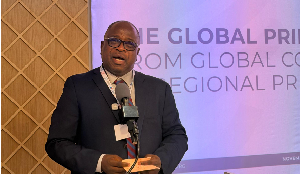
 Minister of State for Climate Change and Sustainability, Seidu Issifu
Ghana has reaffirmed its commitment to addressing climate-induced displacement, calling for increased adaptation financing, stronger regional cooperation and the protection of vulnerable communities amid the growing impacts of climate change.
The Minister of State for Climate Change and Sustainability, Seidu Issifu, made the call during the opening session of “The Global Principles – From Global Consensus to Regional Priorities” at the Climate Mobility Pavilion on the sidelines of COP31 in Antalya, Türkiye, on November 9, 2026.
Speaking on behalf of Ghana, Issifu reaffirmed the country's endorsement of the Global Principles for Addressing Climate Mobility and commended the Global Centre for Climate Mobility (GCCM) for its leadership in advancing the initiative.
He highlighted the growing threat of climate mobility in Ghana and across West Africa, noting that approximately seven million Ghanaians living along the country's coastline face increasing risks from rising sea levels and coastal erosion.
Communities such as Keta and Fuveme are already experiencing significant climate-related threats, while drought and water stress continue to undermine livelihoods across the Sahel.
Issifu stressed the need to empower climate-affected communities to remain safely in their homes wherever possible. He added that those compelled to relocate must do so with dignity, adequate protection, and safeguards for their rights and livelihoods.
He called for predictable and accessible adaptation financing, stronger climate-risk assessments and early-warning systems, as well as the integration of climate mobility into national adaptation plans, Nationally Determined Contributions (NDCs) and loss-and-damage responses.
The Minister also underscored the importance of regional cooperation, particularly through the ECOWAS Protocol on Free Movement, and called for meaningful community participation in decisions affecting their future.
Highlighting Ghana's ongoing efforts, he noted that the country is partnering with the GCCM on climate mobility assessments, community consultations and the development of a National Climate Mobility Blueprint to strengthen existing national policies and responses.
He emphasised the need for progress beyond global commitments and endorsements, with tangible improvements in community resilience, the protection of human rights and expanded opportunities for vulnerable populations.
Issifu urged stakeholders to move beyond global consensus and prioritise locally driven, adequately financed and practical solutions that address the realities of climate mobility.
Ghana's participation in COP31 reflects the government's commitment, under the leadership of President John Dramani Mahama, to advancing climate resilience, protecting vulnerable communities and promoting sustainable solutions to the impacts of climate change.
Story by Mawuli Ahorlumegah reporting from the United Nations Climate Change Conference COP31, Antalya, Türkiye

Copyright © 1994 - 2026 GhanaWeb. All rights reserved.










