



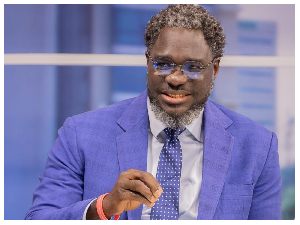
 Dr Palgrave Boakye Danquah
Lecturer at the University of Professional Studies, Accra (UPSA), Dr Palgrave Boakye Danquah, has criticised the newly launched Heritage Series banknotes, describing their introduction as a missed opportunity to celebrate Ghana's historical figures ahead of the country's 70th independence anniversary in 2027.
According to him, the new currency notes fail to adequately recognise the contributions of Ghana's forebears, particularly the Big Six and traditional leaders who played significant roles in the country's history.
In a statement issued on Thursday, November 12, 2026, following the launch of the Heritage Series banknotes, Dr Boakye Danquah argued that the redesign should have been used to preserve and promote Ghana's historical identity.
See the new Heritage Series Ghana cedi notes
He said the currency should serve as more than a medium of exchange, insisting that it must also reflect the country's history and heritage.
"Currency is not just money. Currency is memory. Every time a Ghanaian market woman in Kumasi, a fisherman in Cape Coast, a student in Tamale, or a child in Ho touches a cedi note, they should be touching history," he stated.
Dr Boakye Danquah proposed that each of the six members of the Big Six should have been honoured with a distinct banknote.
The individuals he mentioned were Dr J.B. Danquah, Dr Kwame Nkrumah, Edward Akufo-Addo, Ako Adjei, Emmanuel Obetsebi-Lamptey and William Ofori Atta.
He argued that featuring the six independence figures would have provided an opportunity for younger generations to learn about the country's independence struggle through the currency they use daily.
"Six men, six notes, six stories. Imagine a child collecting all six and learning the full story of independence - not a one-sided story, but the complete story," he said.
Beyond the Big Six, the UPSA lecturer called for traditional leaders from different parts of the country to be represented on the redesigned currency.
He mentioned the Asantehene, Ga Mantse, Okyenhene, Yaa Naa, Nayiri, Wa Naa and Bolgatanga Naba, among other traditional authorities, whom he believes have contributed to Ghana's historical and cultural development.
According to him, Ghana's history cannot be attributed to politicians alone, as traditional authorities also played important roles in preserving the country's heritage and supporting the independence struggle.
"Ghana was not built by politicians alone. Ghana was built by our Kings and Queens, our Chiefs and Traditional Leaders, who held this land together long before independence, and who gave their blessings, their lands, and their people to the independence struggle," he stated.
He further described the proposed redesign as an opportunity to create a national representation of Ghana's cultural diversity and historical achievements.
"A rebranded Cedi for our 70th anniversary should have been a National Gallery in our pockets," he added.
Dr Boakye Danquah maintained that his criticism was not intended as an attack on any individual or institution but rather an appeal for the country's historical contributions to be adequately recognised.
He urged the relevant authorities to reconsider the design before Ghana marks its 70th independence anniversary in 2027.
"We still have time. Before 2027, before we celebrate 70 years, let us go back and do this properly. Let us rebrand the Cedi with our forebears and our traditional leaders. Let us make our money speak our history," he said.
Ghana will mark 70 years of independence on March 6, 2027, having gained independence from British colonial rule on March 6, 1957.
NA/BAI

Copyright © 1994 - 2026 GhanaWeb. All rights reserved.










