


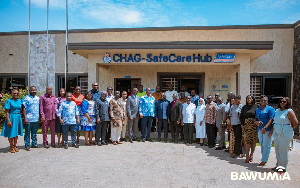
 Dr Bawumia among other stakeholders
The Presidential Candidate of the New Patriotic Party (NPP), Dr Mahamudu Bawumia, has reaffirmed his commitment to strengthening collaboration between the government and faith-based organisations in Ghana's health and education sectors, pledging to institutionalise the partnership to ensure sustainable and effective service delivery.
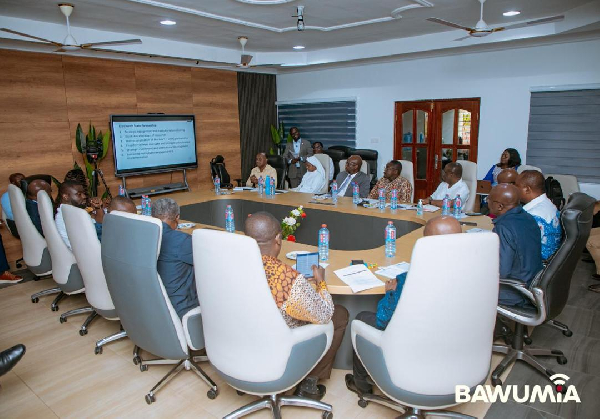
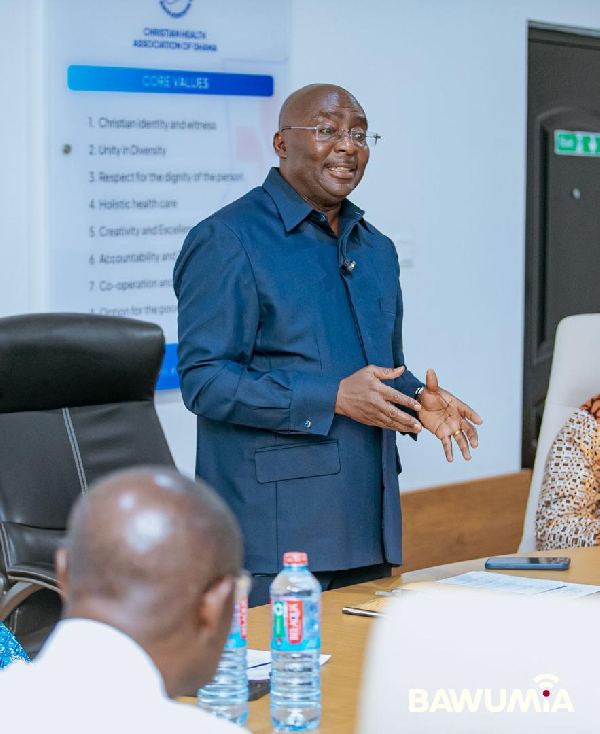
Dr Bawumia gave the assurance during a meeting with the leadership of the Christian Health Association of Ghana (CHAG), as part of his ongoing engagements with key stakeholders to discuss national development priorities and explore practical solutions to challenges confronting various sectors.
He acknowledged CHAG's significant contribution to healthcare delivery in Ghana, particularly in rural and underserved communities, where its facilities provide essential services to poor and vulnerable populations.
According to him, although CHAG operates approximately six per cent of Ghana's health infrastructure through its 42 health facilities, the association accounts for an estimated 30 to 40 percent of healthcare services delivered in the country.
He described this contribution as significant, particularly given the challenging circumstances under which many of the facilities operate and their critical role in extending healthcare access to communities that might otherwise struggle to obtain essential medical services.
Dr Bawumia said the engagement provided an opportunity to discuss how the government could establish a more structured and sustainable relationship with faith-based institutions, rather than relying on arrangements that may not adequately guarantee long-term institutional support.
He reiterated his commitment, as outlined in the NPP's 2024 manifesto, to institutionalising government partnerships with faith-based organisations in both healthcare and education.
In the education sector, he reaffirmed his intention to partner with religious bodies in managing mission schools, stressing the importance of recognising and strengthening the historic contribution of churches and other faith-based organisations to education in Ghana.
On healthcare, Dr Bawumia disclosed that discussions with CHAG centred on amending the existing Legislative Instrument (LI 525) to integrate the association more firmly into Ghana's healthcare delivery framework.
The proposed amendment, he explained, would provide a more formal and institutionalised framework for government collaboration with CHAG, rather than relying primarily on Memoranda of Understanding (MoUs).
The meeting also addressed concerns about the welfare and motivation of healthcare professionals, particularly those serving in rural and deprived communities.
Dr Bawumia said the possibility of introducing additional incentives for health personnel working in rural areas was positively discussed. The meeting also considered proposals to remove import duties on medical equipment to facilitate the retooling and modernisation of healthcare facilities.
These proposed measures are intended to address some of the operational challenges facing faith-based health institutions and enhance their capacity to deliver quality healthcare to communities across the country.
He emphasised that the engagement formed part of a broader consultation process aimed at ensuring that policies developed by his team respond to the practical challenges confronting institutions and stakeholders.
Dr Bawumia thanked the CHAG leadership for their participation and contributions, assuring them that his team would continue consultations and work towards developing concrete policy proposals to address the challenges facing the association and healthcare delivery more broadly.
His renewed commitment places the relationship between the government and faith-based institutions at the centre of his proposed approach to strengthening healthcare and education, with particular emphasis on the role of mission institutions in serving communities across Ghana.
If implemented, the proposed institutional framework would provide a more predictable basis for collaboration, support the operations of faith-based facilities and strengthen the contribution of religious organisations to national development.
Samira Bawumia Stuns Audience with ‘Asaase Yaa’ Poem at Literary Night

Copyright © 1994 - 2026 GhanaWeb. All rights reserved.










