


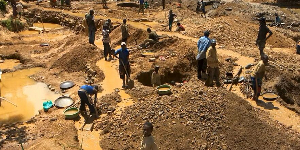
 File photo of a galamsey site
Ghana receives between 42.5 and 62 tonnes of mercury annually through illicit channels for use in artisanal and small-scale gold mining, according to the Chief Executive Officer of Smart Innovation Ghana Limited, Dr Sylvester Akpah.
He disclosed this at a symposium organised by the United States Embassy in Accra under the Ambassador’s Water Experts Programme, raising concerns about the impact of uncontrolled mercury use on public health and the environment.
Dr Akpah said the toxic substance entered the country through unidentified routes and was widely used in small-scale mining communities despite existing controls at the ports.
He noted that more than 2.5 million people depended directly or indirectly on artisanal and small-scale mining for their livelihoods, making mercury pollution a significant concern for mining communities and surrounding areas.
He identified the Western, Ashanti, Eastern and Central regions as particularly affected, with several water bodies exposed to contamination.
Dr Akpah said Tarkwa and its surrounding communities were under severe environmental pressure, warning that continued pollution threatened access to safe drinking water.
He also raised concerns about the absence of a dedicated national directorate to oversee mercury use and enforce related regulations in the mining sector.
According to him, miners and residents in nearby communities were exposed to mercury through routine gold-processing activities, with the substance posing risks to vital organs, including the kidneys, lungs and brain.
He called for stricter enforcement of existing regulations and the adoption of alternative technologies to reduce and eventually eliminate mercury use in small-scale mining.
Dr Akpah cited gold-catching technologies as an alternative to mercury-based processing but said their adoption remained limited despite investments in importing the equipment.
Although Ghana has ratified the Minamata Convention on Mercury, an international agreement aimed at protecting human health and the environment from mercury pollution, he said enforcement remained a major challenge.
He urged stakeholders to strengthen controls on the importation and use of mercury while accelerating the adoption of safer gold-processing technologies.

Copyright © 1994 - 2026 GhanaWeb. All rights reserved.










