



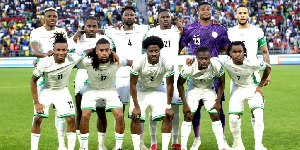
 Nigeria have reportedly submitted a petition to FIFA
As the qualification for the remaining slots of the 2026 World Cup intensifies, a legal storm is quietly gathering around the Democratic Republic of Congo’s national team.
At the heart of the controversy is a petition reportedly submitted by the Nigeria Football Federation (NFF), questioning the eligibility of several DR Congo players who were born or raised abroad but now represent the Central African nation at international level.
The argument appears straightforward: DR Congo’s constitution does not permit dual nationality, yet several of its internationals are believed to retain foreign citizenships.
But beneath the surface, the issue is far more complex and FIFA’s own regulations may not support the outcome some expect.
‘Backdoor rubbish’ – Fans react to Nigeria’s petition to disqualify DR Congo
This explainer examines the facts, the law, and the precedents shaping what could become one of African football’s most consequential eligibility disputes.
The Allegation
Article 10 of the 2006 Constitution of the Democratic Republic of Congo states that Congolese nationality is exclusive and cannot coexist with another nationality.
Based on this reasoning, the petition contends that DR Congo has fielded ineligible players and that FIFA should impose sanctions, potentially affecting World Cup qualification outcomes.
FIFA’s Position
FIFA’s eligibility framework is governed by Articles 5 to 9 of the FIFA Statutes, which define who may represent a national association. Under these provisions, a player is eligible if he holds the nationality of that country.
In practice, FIFA recognizes nationality through a single administrative instrument: a valid passport issued by a competent state authority.
FIFA does not assess whether the issuing country complied with every internal legal requirement before granting nationality.
Instead, it relies on the formal acts of sovereign states, presuming that governments apply their own laws correctly when issuing official documents.
This distinction is critical. FIFA is not a constitutional court, nor does it arbitrate domestic citizenship disputes.
Citizenship vs Nationality
While citizenship law is governed domestically, nationality for football purposes operates within a narrower framework. Once a state issues a passport, FIFA treats it as conclusive evidence of nationality unless the document is proven to be forged or is formally revoked.
Responsibility for any internal legal inconsistency lies with: National immigration authorities, domestic courts and the issuing government Not FIFA.
The Fraud Question
Under the FIFA Disciplinary Code, fraud exists only when false or forged documentation is knowingly submitted. A passport issued by a recognized state authority, and not revoked, does not meet that definition.
Consequently, allegations of fraud against DR Congo’s football federation would require proof that documents were falsified or illegally manufactured, an evidentiary burden that is difficult to meet without direct state involvement.
The Nigeria Factor: Would a petition lead to a slot?
Even if FIFA were to take action, established procedure suggests that qualification slots are not reassigned based on the origin of complaints.
FIFA typically resolves eligibility disputes by recalculating results, ordering replays, or applying competition regulations, not by awarding automatic advancement to petitioning federations.
Any suggestion that Nigeria would inherit a qualification place simply for raising the issue misunderstands FIFA’s dispute resolution framework.
The most likely outcome
If the matter escalates, the most probable sequence would involve FIFA seeking clarification from Congolese authorities.
Should the DR Congo government reaffirm the validity of the passports, the issue would likely be resolved administratively.
At most, the Congolese Football Federation could face warnings or administrative recommendations. Disqualification or tournament exclusion remains a remote possibility.
Conclusion
While the debate raises legitimate governance questions within DR Congo, FIFA’s regulatory framework prioritizes administrative certainty over constitutional interpretation.
Unless state-issued passports are formally withdrawn or declared invalid, FIFA is unlikely to revisit its approvals or disrupt the World Cup qualification pathways.
FKA/EB

Copyright © 1994 - 2026 GhanaWeb. All rights reserved.










