



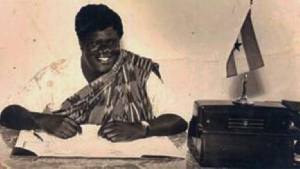
 Ohene Djan was Ghana's first sports minister
The genesis of Ghana’s sporting achievements in Africa and across the globe rests on the relentless efforts of the late legendary sports administrator, Ohene Djan.
He spearheaded various sporting initiatives and projects under the reign of former President Dr Kwame Nkrumah and helped the country to secure continental laurels.
The sports administrator championed football development in Africa, playing a key role in organizing competitions and serving as a strong voice in major decisions.
As Ghana celebrates its icons in the month of March, this article, originally published on ghanaweb.com on April 13, 2020 details Ohene Djan’s profile and contributions to sports.
Ohene Djan’s Profile and Contributions
Ohene Djan, born on January 29, 1924, was a Ghanaian sports administrator. He was the first Director (Minister) of Sports at the Central Organisation of Sports (COS) and also served as vice-president of the Confederation of African Football (CAF).
His journey began on July 1, 1960 (Ghana’s Republic Day), when a new ministerial portfolio was created after Kwame Nkrumah assumed office as the country’s first President. Djan, who had been Chairman of the Ghana Amateur Football Association (GAFA) since 1957, was appointed Director of Sports.
During his six-year tenure, he embodied Africa’s growing political role within global football, working to expand diplomatic sporting ties beyond Europe and South America.
He organized the West Africa Football Cup in 1959 and established the Black Stars in the same year. In 1960, he set up the Central Organisation of Sports, which oversaw all sporting events in Ghana.
Advocacy for Africa in Global Football
In 1964, two years before the World Cup finals, Africa withdrew from the tournament in protest against FIFA’s discriminatory allocation of slots, which heavily favored Europe and South America while sidelining Africa, Asia, and Oceania.
Through Ohene Djan, then Ghana’s Director of Sports, Africa wrote to FIFA condemning the unfair selection process. Djan described the arrangement as an “unfair World Cup arrangement for Afro-Asian countries.”
This advocacy led to Africa’s boycott of the 1966 World Cup, a landmark moment in football history.
Legacy
Ohene Djan served as Ghana’s first Director of Sports from 1960 to 1966. In 2004, the Accra National Stadium was renamed after him. However, in 2011, the Accra Metropolitan Assembly reverted to the old name, Accra Sports Stadium, arguing that it was a city stadium rather than a national one.
The iconic sports administrator passed away on March 26, 1987.

Copyright © 1994 - 2026 GhanaWeb. All rights reserved.










