



 The policy is expected to enhance the competitiveness of Ghanaian exports
Ghana’s bilateral trade with China has surpassed $14.1 billion, marking a year-on-year increase of more than 193 percent, according to Ghana’s acting Chinese Ambassador, Li Yang.
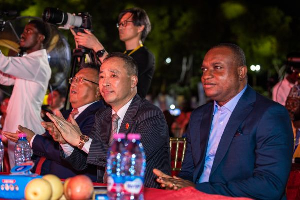
Speaking at this year’s Lantern Festival celebration in Accra, organised by the Ghana Association of Chinese Societies at the forecourt of the State House, Ambassador Li described the milestone as a new phase in the deepening economic partnership between the two countries.
The event marked the close of the Chinese New Year festivities and commemorated 66 years of diplomatic relations between Ghana and China, as well as 70 years of China-Africa cooperation.
China's zero-tariff offer will boost Ghana's exports - Chinese Ambassador
A key announcement at the event was China’s decision to implement zero-tariff treatment for 53 African countries, including Ghana, beginning May 2026.
The policy is expected to enhance the competitiveness of Ghanaian exports such as cocoa derivatives, processed agricultural goods, shea products, cashew, timber products and light manufactured items in the Chinese market.
While Ghana continues to record a trade deficit with China due to high imports of machinery, electronics and industrial equipment, government says the tariff-free access presents an opportunity to rebalance trade flows through increased value addition and compliance with Chinese quality standards.
Minister of Food and Agriculture, Eric Opoku, linked the expanding trade ties to the government’s broader economic transformation agenda under President John Dramani Mahama. He outlined plans to modernise agriculture, including the development and expansion of irrigated land.
"Chinese investments in Ghana currently span manufacturing, retail and wholesale trade, hospitality, mining and infrastructure development," he noted.
Deputy Minister of Defence, Ernest Brogya Genfi, on his part said these investments have contributed to job creation and technical cooperation.
Meanwhile, deeper collaboration in irrigation, agro-processing, greenhouse farming and mechanisation could strengthen Ghana’s push for import substitution and export diversification, particularly within the African Continental Free Trade Area (AfCFTA) market.
Officials and economists, however, caution that Ghana must focus on increasing local content participation, boosting SME involvement, ensuring skills transfer and maintaining sustainable debt management.
With trade volumes now exceeding $14 billion and zero-tariff access set to take effect in 2026, both countries say the next phase of relations will prioritise value creation, industrial growth and long-term economic sustainability.
SP/MA

Copyright © 1994 - 2026 GhanaWeb. All rights reserved.










