



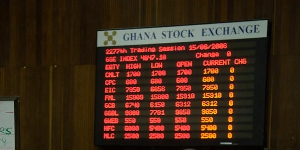
 The Ghana Stock Exchange(GSE)
The Ghana Stock Exchange(GSE) has introduced caps on share buybacks and tightened listing standards under its 2026 rules, strengthening market safeguards at a time when equities are extending a strong rally driven by falling interest rates and renewed investor participation.
The reforms formalise limits on share repurchases to prevent market manipulation, artificial price support and erosion of capital buffers, particularly in systemically important sectors such as banking. The Exchange says this move is designed to ensure buybacks are used for legitimate capital management rather than short-term price engineering.
A share buyback occurs when a company uses its own funds to repurchase its shares from the market, reducing the number of shares in circulation. This can increase earnings per share and support the stock price, but if done excessively it may weaken the company’s capital position or create artificial price pressure.
Under its revised framework, the Exchange is also reinforcing corporate governance, financial reporting and continuous disclosure obligations. Officials say the objective is to prioritise issuer quality as the foundation for sustainable liquidity growth.
While enhanced rules can slow listing volumes in the short-term, GSE’s position is that stronger governance and transparency are necessary to rebuild and sustain investor confidence following the banking sector clean-up and Domestic Debt Exchange Programme.
“The reforms are a strategic response to Ghana’s evolving financial landscape,” said the Head of Listing and New Products. “As the heightened risk environment continues to ease, transparency, governance and disclosure standards become even more important.
“By making the listing framework more responsive and aligned with global best practices, we are creating clearer pathways for corporates, SMEs and innovative enterprises to access long-term equity and bond financing,” Joyce Esi Boakye elaborated in an interview with B&FT.
The Main Market will retain its strict profitability requirement; a decision that officials say reflects the need to protect retail and pension fund investors who account for a significant share of participation.
The Exchange maintains that established companies with proven business models and predictable cash flows are better suited to the primary board, while growth-oriented firms can access capital through the Ghana Alternative Market (GAX) under proportionate regulatory requirements.
The rulebook also preserves a public-interest clause that allows discretionary approvals in exceptional cases. GSE describes it as a limited safety mechanism rather than a substitute for compliance, adding that its use will be subject to oversight.
By middle of the third trading week in February 2026, GSE’s market capitalisation had crossed the GH¢200billion threshold and closed the week at approximately GH¢211billion.
The reforms come as equity performance remains firm. As of February 19, the Composite Index has risen 0.38 percent to 1,384 points while the Financial Stock Index advanced 2.84 percent to 6,326 points, led by banking and insurance counters.
Republic Bank Ghana gained 10 percent to GH¢1.65 per share, SIC Insurance rose 9.76 percent to GH¢2.25, Access Bank Ghana climbed 9.42 percent to GH¢25.9 and GCB Bank reached a new high of GH¢30. Fan Milk added 6.23 percent to reach GH¢12.96 while MTN Ghana declined 1.85 percent to GH¢5.3.
Market liquidity strengthened significantly, with turnover increasing nine-fold to GH¢218.5million on volume of 39.75 million shares. MTN Ghana accounted for about 80 percent of total traded volume and 77 percent of session value, highlighting the market’s concentration risk.
The rally follows a 79.4 percent return in 2025, when market capitalisation reached GH¢172billion. Treasury bill yields have declined to between 8 percent and 11 percent, reducing the relative appeal of fixed-income instruments. Market participants say the compression in real returns has accelerated capital rotation into equities.
Investors are less inclined to hold Treasury bills at 10 percent or 11 percent when some stocks have delivered returns approaching 200 percent. The confidence built through 2025, the participant added, is likely to carry into 2026.
Analysts expect the interest rate environment to remain supportive. “As real returns on fixed income compress, capital rotates decisively into equities,” Black Star said, projecting stronger equity performance in 2026. Equity valuations remain relatively attractive compared with historical averages and regional peers, despite improving corporate earnings and balance sheet repair.
Listed companies exposed to domestic consumption, services and financial intermediation are expected to benefit from lower borrowing costs and improving demand.
Banking, telecommunications, education and consumer goods have been identified as sectors positioned to capture growth momentum. Improved system liquidity is also expected to support trading volumes, reversing subdued activity seen when high-yield government securities dominated investor attention.
Risks remain, as a resurgence of inflation, currency instability or fiscal pressures could tighten liquidity and weigh on investor confidence. External shocks, including commodity price volatility and shifts in global risk sentiment, could affect foreign inflows. Domestically, earnings’ concentration in a few heavily weighted stocks continues to pose structural vulnerability.
Exchange officials say the current rally’s durability will depend on broader participation, sustained earnings growth across sectors and continued improvements in liquidity metrics. If tighter rules result in fewer listings but stronger governance, deeper capital formation and more stable trading conditions, the reforms will be considered aligned with long-term market development goals.
The Exchange is attempting to consolidate gains from the rally while reinforcing oversight, signalling a shift toward capital discipline as the equity market enters a lower interest-rate cycle.

Copyright © 1994 - 2026 GhanaWeb. All rights reserved.










