



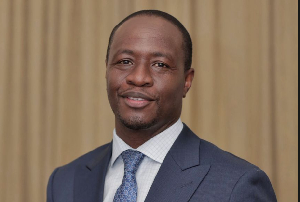
 Communications professional and former Head of Corporate Affairs at Ghana Cocoa Board, Fiifi Boafo
Communications professional and former Head of Corporate Affairs at Ghana Cocoa Board, Fiifi Boafo, has called for a deliberate and structured approach to developing local businesses within mining communities following Parliament’s approval of the country’s lithium agreement.
Speaking on The Big Issue on TV3 Ghana on Monday morning, Boafo emphasised that Ghana must move beyond the traditional focus on employment as the primary measure of local participation in the extractive sector.
According to him, while job creation for locals remains important, the real long-term benefit lies in empowering indigenous businesses to grow alongside mining operations.
“When we talk about local participation, we often limit it to employment. But we must go beyond that,” he stated.
“The bigger contracts are awarded to non-local companies, and when they make profits, the money leaves the community.”
Drawing from his personal experience growing up in Tarkwa, one of Ghana’s major mining hubs, Boafo highlighted what he described as persistent capital flight from mining communities.
He argued that the dominance of external contractors deprives local economies of the opportunity to develop sustainably, as profits generated within these communities are often repatriated elsewhere.
Boafo proposed that policymakers and industry players introduce deliberate provisions to prioritize capable local businesses in the awarding of mining-related contracts.
“Can we make provision so that when awarding contracts within the mining industry, special consideration is given to locals who have the capacity?” he questioned.
His comments come in the wake of Parliament’s ratification of the lithium agreement—widely seen as a strategic move to position Ghana within the global energy transition value chain.
However, Boafo criticized the government for what he described as a lack of adequate consideration for national and community interests in the revised agreement.
He argued that the deal appears to dilute potential benefits to the country and faulted the absence of a comprehensive cost-benefit analysis presented to Parliament.
As Ghana enters the lithium era, stakeholders are increasingly calling for policies that ensure resource extraction leads to sustainable economic transformation for host communities, rather than short-term gains.
Boafo’s remarks add to growing concerns that without deliberate local content strategies, mining activities may continue to benefit external actors more than the communities directly affected.
Meanwhile, learn of the story of the man behind the iconic Akwaaba frames in Ghana:

Copyright © 1994 - 2026 GhanaWeb. All rights reserved.










