



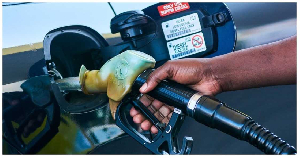
 File photo of a fuel pump dispenser
The Chamber of Petroleum Consumers (COPEC) has called on government to establish a strategic fuel stock programme to protect consumers from frequent price hikes driven by global market volatility.
The Executive Secretary of COPEC, Duncan Amoah, said Ghana’s heavy reliance on imported refined petroleum products leaves the country vulnerable to international oil price fluctuations.
Speaking on Joy FM’s Midday News on Wednesday, July 15, 2026, he stressed that Ghana remains a price taker and must take deliberate steps to reduce exposure to global shocks.
Amoah urged renewed efforts to build reserves that would allow Ghana to purchase and store petroleum products when global prices are low and release them when prices rise.
“You cannot have the tanks of BOST still empty at this point when, just a few weeks ago, prices were dropping and we could have taken advantage of that to get products into storage,” he said.
Minority walkout on BoG briefing was about publicity, not accountability - Ayariga
He explained that maintaining adequate reserves would give government the ability to cushion consumers from sudden increases at the pumps.
His comments come ahead of an expected increase in fuel prices from July 16, despite relative stability in the local currency.
Analysts warn that tensions in the Middle East could further push up global crude oil prices.
Amoah added that strengthening local refining capacity and ensuring a steady supply of crude oil to domestic refineries would help reduce Ghana’s dependence on imported finished petroleum products.
COCOBOD pays off non-DDEP cocoa bill holders with GH¢162m settlement
He noted that Ghana’s inability to maintain strategic reserves over the years has left consumers exposed whenever international prices rise.
“If prices go up tomorrow and government had stocked up a week or two earlier, it could intervene and say there is enough fuel in stock, so there’s no need to immediately apply the current spot prices to the market,” he explained.
COPEC has therefore called on the Ministries of Energy and Finance to prioritise the development of strategic reserves and support local refining capacity as part of broader energy sector reforms.
DR/SA

Copyright © 1994 - 2026 GhanaWeb. All rights reserved.










