



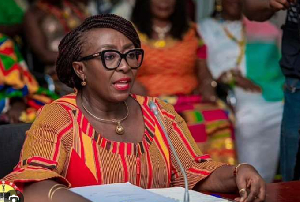
 Dzifa Abla Gomashie is the Minister of Tourism, Culture, and Creative Arts
The Minister for Tourism, Culture and Creative Arts, Abla Dzifa Gomashie, has called on Ghanaians to make deliberate choices that support local creative industries by patronising Ghanaian food, fashion and music, stressing that such decisions sustain livelihoods and create employment opportunities.
She also expressed appreciation to the European Union, UNESCO, national implementation teams and technical experts for their financial and technical support towards the successful implementation of the UNESCO Culture|2030 Indicators project in Ghana.
The Minister made the remarks during the restitution workshop on the pilot implementation of the UNESCO Culture|2030 Indicators, organised by the Ministry of Tourism, Culture and Creative Arts in collaboration with UNESCO at the Exhibition Hall of the Ghana Museums and Monuments Board in Accra.
The workshop formed part of Ghana’s efforts to integrate culture into national development planning and strengthen evidence-based policymaking within the cultural and creative sectors.
Delivering the keynote address, Dzifa Gomashie underscored the need for Ghana to accord culture the recognition it deserves as a critical driver of economic growth, social cohesion and national identity. She noted that although the cultural and creative sector contributes significantly to the economy, it is often perceived mainly as entertainment rather than a strategic development sector.
According to the Minister, the implementation of the UNESCO Culture |2030 Indicators presents Ghana with an opportunity to generate credible national and local data to demonstrate the sector’s contribution to governance, education, livelihoods and community well-being.
She explained that the availability of reliable data would strengthen policy formulation, guide investment decisions and position culture more prominently within Ghana’s national development priorities.
Dzifa Gomashie further referenced lessons from her recent participation in National Cultural Week in Burkina Faso, where she observed how sustained public investment in culture had stimulated broad social participation and economic activity. She said the experience reinforced the importance of prioritising culture as a key pillar of Ghana's development.
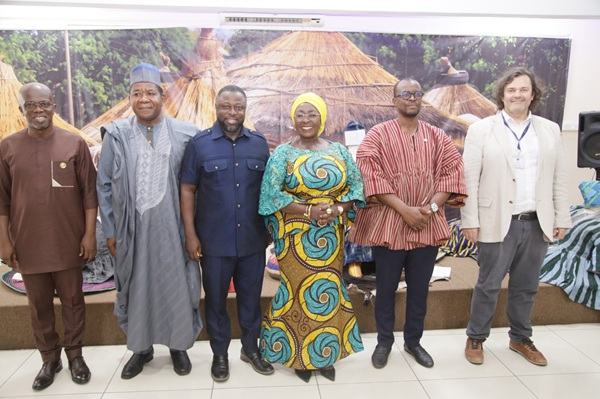
UNESCO Representative to Ghana, Edmond Moukala, described the workshop as a significant milestone in Ghana’s cultural policy development, stating that the Culture|2030 Indicators provide an important evidence base for the country’s forthcoming cultural policy and action plan.
He stressed that culture should not be treated as a stand-alone sector but as a cross-cutting force that shapes governance, education, inclusion, economic participation and sustainable development.
Moukala added that Ghana’s participation places the country among a growing global community using the UNESCO framework to measure culture’s contribution to development.
Secretary-General of the Ghana Commission for UNESCO, Osman Tahidu Damba, commended the Ministry and stakeholders for the year-long implementation process, describing the initiative as a major step toward making Ghanaian culture more visible, measurable and central to the country’s sustainable development agenda.
Speaking on behalf of the European Union, Timothy Dolan reaffirmed the EU’s commitment to supporting culture as a catalyst for social cohesion, economic growth and environmental sustainability.
He announced that the EU-funded Sankofa II Programme would be launched in the coming weeks to support heritage preservation and the growth of Ghana’s cultural and creative industries over the next three years.
The workshop brought together policymakers, cultural practitioners, development partners and technical experts within the cultural and creative sectors.

Copyright © 1994 - 2026 GhanaWeb. All rights reserved.










