



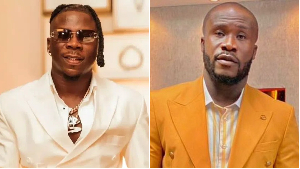
 Stonebwoy and Dr Likee
GhanaWeb feature by Isaac Dadzie
Two of Ghana’s most prominent entertainers. Two major shows. Three cars sold to make them happen.
The details are different. The story is the same.
In April, Stonebwoy revealed that he had sold his Range Rover and V8 to finance The Torcher Experience, his first self-organised concert in his home region, the Volta Region, held in March.
He described the decision not as a loss, but as a deliberate long-term investment.
“I even had to sell my two cars to invest in this show,” he said.
'I sold my Range Rover and V8 to invest in Ho concert' — Stonebwoy discloses
Weeks later, a similar story emerged from London. Dr Likee confirmed that he sold his personal car to finance his sold-out Dr Likee Live at Indigo at The O2 in May.
“When I return to Ghana, I won’t even have a car to sit in,” he said in an interview with ZionFelix after the event.
Dr Likee sold his car to fund London comedy show - Papa Kumasi
Although both shows were successful in terms of attendance, both men returned home lighter in pockets.
And both stories raise an uncomfortable question: why are some of Ghana’s biggest entertainment names having to sell personal property just to stage their own events?
The answer is structural, and it has been building for years.
In Ghana, royalties are unreliable and streaming revenue is too low. As a result, many Ghanaian musicians rely heavily on live performances, brand endorsements, and seasonal events such as Christmas and Easter shows to earn a living.
While this has created a booming events and nightlife culture, it remains an unstable model.
Bad weather, a pandemic, an economic downturn, or political interference can wipe out months of income.
Entertainment systems in other countries solve this problem differently. Record label advances, corporate entertainment budgets, and a strong sponsorship culture mean creatives do not have to choose between their assets and their ambitions.
But in Ghana, that pipeline too often runs dry precisely when creatives need it most.
Over the years, creatives, including musicians, comedians, filmmakers, and dancers, have consistently called for stronger support from both the public and private sectors, citing it as a major hindrance to their growth.
It becomes even more difficult when these creatives, with little to no external support, are forced to sacrifice not only their earnings but also their personal assets to fund events that do not guarantee sustainable returns.
Some would describe this as a worrying picture, despite the GH¢20 million budgetary allocation for the creative arts announced by the government in 2025.
The entertainers are doing the work. They are taking the risk. They are building the visibility that puts Ghana on international stages.
But the infrastructure, investment systems, corporate partnerships, and formal funding mechanisms have not kept pace.
Many also argue that the industry itself remains fragile, with many entertainers rarely making profits from self-organised shows.
Corporations, meanwhile, often sponsor events primarily for brand visibility rather than direct financial returns.
So the question remains: if there are no guaranteed financial returns, why invest?
Until the infrastructure is designed to ensure that the entertainment industry is both sustainable and profitable, Ghana’s biggest stars will continue funding their dreams the only way the system currently allows them to, by selling what they own.
ID/MA
Up close with Kwan Pa Band - Talkertainment

Copyright © 1994 - 2026 GhanaWeb. All rights reserved.










