



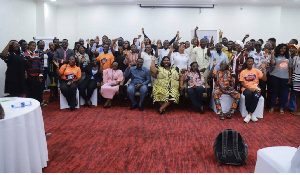
 Participants at the close out session of the project
The Youth for Health (Y4H) Project, a European Union funded adolescent sexual and reproductive health initiative, has help to avert about 24,131 unintended pregnancies, 8,381 unsafe abortions, and 30 maternal deaths in Northern Ghana
The three-year project implemented by Marie Stopes International (MSI) Reproductive Choices Ghana and Youth Advocate Ghana, also contributed to the delivery of more than 319,000 sexual and reproductive health services.
It also aided the uptake of about 46,965 long-acting reversible contraceptive services and 270,320 short-term contraceptive services among women and adolescents under age 20.
Speaking at the close out session of the Project, Abukari Abdul Mumin, Programmes Manager at MSI Reproductive Choices said the number impacted represents school careers protected and futures secured.
He said from 2022 to December 2025, the project operated across 11 districts in the Northern and Upper East regions.
The project which formed part of a multi-country initiative implemented in Ethiopia, Kenya, Tanzania, Zambia, Sierra Leone and Ghana targeted most underserved communities where sociocultural norms, poverty and limited access to youth-friendly health services continue to place adolescents at risk.
Mumin said Y4H was implemented in collaboration with the Ghana Health Service (GHS) and the Ghana Education Service (GES), particularly the School Health Education Programme (SHEP).
It aimed at empowering adolescents and young people to access accurate, rights-based sexual and reproductive health information and services through demand generation, service delivery, and policy and systems strengthening.
He noted that as part of efforts to improve youth-friendly health services, the project built the capacity of 240 healthcare providers in adolescent-friendly care, disability inclusion and gender-transformative service delivery.
Mumin said the project underscored the importance of combining service delivery with community engagement, male involvement, youth empowerment and strong institutional partnerships to achieve sustainable impact.
“Although the project funding had ended, the structures, trained peer educators, teachers and health workers would continue to deliver services and education through existing systems within the Ghana Health Service and Ghana Education Service,” he said.
Seraphina Ayinpoka Atanga, a youth Champion under the YH4 Project in the Bolga East District, Upper East Region said deep-rooted myths, parental resistance, and the exclusion of persons with disabilities and parental resistance continues to hinder effective sexual and reproductive health education among young people in rural communities.
She said misconceptions surrounding menstruation and contraception remained some of the most significant challenges faced during youth engagements.
“The parent believed that once young people are informed about safe sex and safe abortion, it gives them the green light to engage in sexual activities,” she said
Madam Clara Nyarko, Director of Programmes MSI Reproductive Choices, said the achievements of Y4H show that adolescent sexual and reproductive health cannot be addressed in isolation.
“Knowledge, services, community engagement, youth empowerment, and policy advocacy must all work together, we have seen young people become informed, confident, and empowered to make decisions about their health under this project,” she said.
She said health facilities, schools, and communities have been strengthened under Y4H and sustaining these gains requires embedding tools like the community scorecard, sustaining school clubs, empowering youth champions, integrating adolescent indicators into district plans, and advocating for policy scale-up.

Copyright © 1994 - 2026 GhanaWeb. All rights reserved.










