



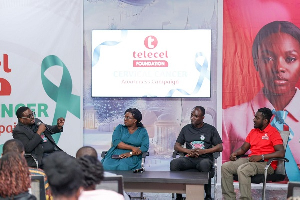
 The campaign, which seeks to offer free cervical cancer screening to at least 5,000 women annually
In recognition of Cervical Cancer Awareness Month, the Telecel Foundation joined the Korle-Bu Teaching Hospital to launch a nationwide cervical cancer awareness and screening campaign, aimed at improving early detection and reducing preventable deaths among women.
The campaign, which seeks to offer free cervical cancer screening to at least 5,000 women annually for the next two years, builds on Telecel Group’s donation of advanced diagnostic equipment to three public hospitals: Korle-Bu Teaching Hospital in Greater Accra, Tamale Teaching Hospital in the Northern Region, and Sefwi Wiawso Hospital in the Western North Region.
Speaking at the launch, Director of External Affairs at Telecel Ghana, Komla Buami, said the Foundation’s approach is to address the challenges around awareness and access to cervical cancer care simultaneously.
“We believe real impact lies where there is high utilisation of the advanced diagnostic equipment we have donated to the three hospitals. Therefore, this campaign is aimed at driving high screening levels for cervical cancer among women across the country. Early detection saves lives, and no woman should lose her life simply because she lacked access to screening,” Mr. Buami said.
The donation of the advanced screening equipment by Telecel Group to three public hospitals nationwide, which included digital colposcopes, HPV testing kits and biopsy instruments, is intended to strengthen early diagnosis and expand access to life-saving care, particularly for women who might otherwise be unable to afford screening.
In addition to screening services, the Telecel Foundation has supported the training of healthcare professionals at beneficiary hospitals to ensure the proper use and long-term maintenance of the donated equipment.
The Telecel Foundation initiative is being implemented in partnership with the Ghana Medical Trust Fund and the Ministry of Health. It combines public education, community outreach and free screening services to encourage long-term behavioural change around women’s health.
The administrator of the Ghana Medical Trust Fund, Madam Obuobia Darko-Opoku said the Fund collaborated with Telecel Group for the cervical cancer project as part of a deliberate intervention to save the lives of women.
“Today is a statement that women’s lives matter, prevention matters and the future of women is worth protecting now, not later. This campaign is about setting the health agenda, shaping national conversation and mobilising action around early detection of cervical cancer into public consciousness,” Madam Darko-Opoku said.
Cervical cancer remains one of the most preventable yet deadly cancers affecting women in Ghana. According to the World Health Organization, it is the second most common cancer among Ghanaian women, yet fewer than ten percent undergo routine screening, often resulting in late diagnosis and high mortality rates.
Women’s health advocates through presentations and a panel discussion said that partnerships between government and the private sector to encourage widespread screening would be essential if Ghana is to meet the World Health Organization’s target of screening 70 percent of women between the ages of 21 and 65.
“The cervical cancer prevention campaign is about collective responsibility. Every person can be an agent of change by taking the message of early screening and vaccination beyond hospitals and into homes, workplaces and communities,” Professor Kwaku Opoku, Head of Reproductive Health at Korle-Bu Teaching Hospital, said.
Adiza, a stage-3 cervical cancer patient receiving treatment at the Korle-Bu Hospital, described how screening had saved her life and urged women not to delay testing, even in the absence of symptoms.
“Screening is quick, and it can save your life. I am here today because I discovered it early and that allowed me to start treatment on time. I want women to know that early screening protects your future,” she said.
Through the initiative, the Telecel Foundation says it aims to help reduce avoidable deaths, strengthen public health systems and support healthier futures for women and families across Ghana.

Copyright © 1994 - 2026 GhanaWeb. All rights reserved.










