



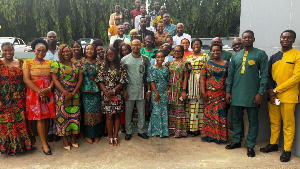
 Activa’s Activ’Lady empowers Ghanaian women with flexible, inclusive insurance solutions
For decades, the insurance industry in Ghana wore a reputation that preceded it: complex, inaccessible, and designed for the few rather than the many. With penetration rates stubbornly hovering around one per cent of GDP, the sector remained one of the most underutilized pillars of the country's financial system.
The image was one of dense policy documents, hefty upfront premiums, and claims processes that demanded patience and persistence. For the average Ghanaian—the market trader, the taxi driver, the small business owner—insurance was something distant, something for corporations and the wealthy.
But something is shifting. Walk into any insurance office in Accra today, and you are likely to hear a different vocabulary: inclusion, flexibility, digital, microinsurance.
The industry is waking up to the reality that growth lies not in serving the same corporate clients more expensively, but in reaching the millions of Ghanaians who have never owned a policy.
One company that has been both a witness to and a participant in this transformation is Activa International Insurance Ghana. Founded in 2005 as Global Alliance Insurance before being acquired by ACTIVA Assurances in 2009, the company has grown to become the 7th largest non-life insurer in Ghana in terms of premium. At the heart of its transformation is a recognition that women entrepreneurs—the backbone of Ghana's informal economy—have been systematically excluded from risk protection.
This article explores how Activa is addressing this gap through the Activ’Lady Program, the leadership perspectives driving this initiative, and what it means for women, business, and risk protection in Ghana.
Women in Ghana constitute half the population and form 64.5 per cent of the labour force—higher than the global average of 46.3 per cent. Yet almost 90 per cent of Ghanaian women in the labour market are in the informal sector, working mainly as market traders, farmers, food processors, and artisans.
Despite their contribution to the economy, most informal workers tend to be excluded from insurance. Research conducted by IFC and Activa in 2018 found that Ghanaian women know little about how non-life policies work or their benefits, except for mandatory motor insurance.
They expressed low trust in insurance, with the belief that insurers mistreat customers. Mechanisms for risk management used by working women differ by segment: market traders prefer the informal ‘susu’ saving system, while professionals and entrepreneurs perceive savings and insurance as forms of investment.
The formal financing gap, according to Accra Street Journal, for women’s MSMEs in Ghana is $242 million. For women entrepreneurs running small businesses, the risks are significant: theft, fire, property damage, personal accident, and loss of income. Without insurance, a single fire or accident can wipe out years of hard work.
As Berlinda Ofori, Deputy Commercial Sales Officer of Activa International Insurance Ghana, explained: “For too long, the industry designed products first and then tried to find customers to fit them. We decided to do the opposite. We asked: Who is being left out? And what do they actually need?”
Activ’Lady Program, a partnership for Change, was formed,d and Berlinda Ofori is in charge. In 2018, Activa partnered with the International Finance Corporation (IFC), a member of the World Bank Group, to develop a strategy to actively expand its services to Ghanaian women.
Recognizing the first-mover advantage in Ghana’s women’s insurance market, Activa took guidance from IFC and developed targeted insurance solutions for Ghanaian women. The project had the support of the Women Entrepreneurs Finance Initiative (We-Fi).
In October 2019, Activa International Insurance Ghana officially launched the Activ’Lady Program with the vision of becoming the non-life insurer and active partner of women in Ghana. The program was designed to increase insurance coverage for women and women in business, first in Ghana, then in other countries where ACTIVA affiliates operate.
Leveraging human-centered design methodology, IFC and Activa developed four prototypes under the Activ’Lady Program :
•Activ’Lady Boom: Women market traders protect against fire, burglary, personal accident, and damage to home content.
•Activ’Lady Biz MSME businesswomen: Comprehensive coverage including goods and cash in transit, employers, and business liability.
•Activ’Lady Advisers: Professional workers, Tailored coverage for professional women
•Activ’Lady Angel App: Millennials Digital-first insurance solution
What sets Activ’Lady apart from traditional insurance is the range of non-financial services bundled with coverage. Both Activ’Lady Boom and Biz solutions offer support to women facing personal emergencies:
•Maternity leave stipend: Two months’ worth of stipend for maternity leave
•Spousal loss support: Stipend for loss of spouse
•National Health Insurance cards: For the primary policyholder and two beneficiaries of her choice
•Financial literacy training: Building understanding and trust alongside coverage
As Berlinda Ofori noted: “You can have the best product in the world, but if people don’t understand why they need it or how it works, they won’t buy it. And if they don’t trust that you will pay their claim when the time comes, they certainly won’t renew.
So we’ve invested heavily in community outreach, in training sessions in local languages, in making sure women see us as partners in their business growth.
In 2021, AXA Partners signed a partnership with ACTIVA Cameroon as the first step of an agreement to be extended to other countries, including Ghana. This collaboration added legal protection to the Activ’Lady offering, providing women entrepreneurs with:
•Unlimited access to a legal web platform designed specifically for this partnership
•Access to a database including templates for legal documents in French and English
•Legal support on various professional and daily issues via lawyers
Another barrier that has long kept Ghanaians away from insurance, according to repor by The High Street Business,s is the payment structure. Annual premiums paid upfront work for salaried employees and corporations, but not for the millions whose income arrives daily or weekly.
To address this, Activa introduced INSUREFLEX, a flexible payment option that allows customers to spread their premiums over an agreed period. As Genevieve Tachie, Deputy Managing Director, explained: “We recognized that the traditional payment structure was excluding a massive segment of the population. If you run a small business, your income might be daily or weekly. Asking you to pay a full year’s premium in one go is unrealistic”.
When combined with mobile money integration, INSUREFLEX removes almost every barrier. A customer can pay their premium in installments via their phone, file a claim through a WhatsApp interface, and get updates without ever stepping into an office.
Activa has invested significantly in digital infrastructure to make insurance accessible to all Ghanaians, regardless of their device or connectivity. The company offers:
•An online platform where customers can purchase policies, pay premiums, and submit and track claims entirely digitally
•USSD options for customers with basic phones to access services using simple codes
•The MyActiva Mobile App, available on Google Play and Apple Store, for policy management on the go
To underscore the company’s commitment to digital security, Activa became the first general insurance company in Ghana to achieve ISO 27001:2022 certification for information security management systems.

Copyright © 1994 - 2026 GhanaWeb. All rights reserved.










