



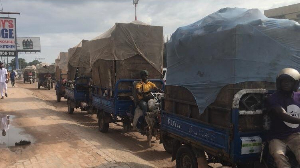
 File photo of tricycles carrying waste
Accra's waste management crisis is being driven not only by the sheer volume of refuse generated every day but also by the absence of a final disposal site within the capital, according to the Environmental Service Providers Association (ESPA).
The association says the city now produces an estimated 4,400 tonnes of waste daily, roughly the equivalent of 4,400 fully loaded aboboyaa tricycles, placing enormous strain on an already overstretched waste management system.
Accra hit by refuse buildup as landfill capacity crisis deepens
Speaking after the recent floods that hit parts of Accra, ESPA Executive Secretary Ama Ofori Antwi said waste collection companies are forced to transport refuse to Nsawam because there is no final disposal site in the Greater Accra Metropolitan Area.
She explained that the long journey, coupled with poor road conditions, has significantly reduced the number of trips refuse trucks can make each day.
According to her, trucks that previously made up to three trips daily are now able to complete only one, slowing waste evacuation and allowing refuse to pile up in many communities.
Ama Ofori Antwi also blamed the city's sanitation challenges on the suspension of public cleansing activities and the lack of regular desilting of drains over the past two years.
She stressed that flood prevention should not begin only after heavy rains have caused damage.
"Waste management is a daily responsibility. If we continue to wait until floods occur before taking action, we will keep facing the same problems every rainy season," she said.
The ESPA Executive Secretary called for sustained public cleansing exercises, routine desilting of drains, improved waste disposal infrastructure, and closer collaboration between metropolitan assemblies and private waste management companies.
She maintained that only a long-term public-private partnership, supported by continuous investment, can effectively manage the thousands of tonnes of waste generated in Accra each day and help reduce the city's recurring flooding.

Copyright © 1994 - 2026 GhanaWeb. All rights reserved.










