



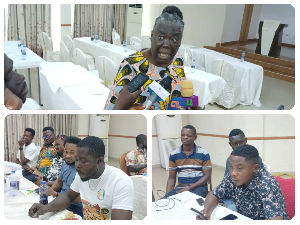
 The RRIG Director challenged political leaders to prioritise the long-term ecological sustainability
The Director of the Rights and Responsibilities Initiative Ghana (RRIG-CDD), Aba Oppong, has urged media practitioners to go beyond their traditional roles of educating, entertaining and informing to serve as honest and transparent brokers in the ongoing national discourse on constitutional reform and the fight against illegal mining (galamsey).
Speaking in an interview on the sidelines of a two-day “Media Engagement on Constitutional Reforms”, Aba Oppong emphasised that journalists have a civic responsibility to facilitate constructive, inclusive and balanced public dialogue on the future of Ghana’s governance.
The two-day capacity-building workshop was designed to strengthen journalists’ understanding of key developments in the constitutional reform process and equip them with the tools to lead informed public debates while ensuring that the views of all stakeholders are fairly represented.
“We are training you to go out as honest brokers in this process. Amplify everyone’s position with transparency, accountability and due diligence, whether it is the report of the Constitution Review Commission (CRC), the government’s stance, civil society proposals or the perspectives of political parties. Set aside political partisanship, present the unadulterated truth, and allow citizens to make their own informed choices,” Aba Oppong said.
A major part of the engagement was a discussion on the environmental and public health concerns associated with illegal mining.
Aba Oppong expressed concern over what she described as the “political massaging” of the galamsey menace at the expense of national survival.
She questioned why political leaders and state actors continue to treat illegal mining with leniency, warning that the destruction of clean water bodies and fertile agricultural lands threatens current and future generations.
“Clean water and fertile lands are critical to human life, and those are the exact two resources that galamsey is destroying. Why are we still massaging this issue? In many host communities, the situation is completely unbearable. It has even begun affecting reproductive health, with doctors reporting babies being born with severe congenital disabilities and an unprecedented rise in chronic kidney and liver diseases,” she said.
The RRIG Director challenged political leaders to prioritise the long-term ecological sustainability of the country over short-term electoral gains.
She argued that political legitimacy is earned by protecting the country’s resources rather than securing votes through environmental compromises.
“Politicians will always want votes, but they must seek votes that are clean. The future and sustainability of Ghana are at stake. Power without the protection of our resources is meaningless. Until our political leaders show that it is genuine national authority and legitimacy they want, we must not let this galamsey issue lie,” she said.

Copyright © 1994 - 2026 GhanaWeb. All rights reserved.










