



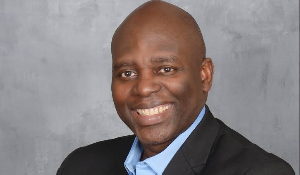
 Dr John Osae-Kwapong is a Fellow at the Centre for Democratic Development (CDD-Ghana)
A Fellow at the Centre for Democratic Development (CDD-Ghana), Dr John Osae-Kwapong, has defended the Office of the Special Prosecutor (OSP), arguing that the institution is crucial to ensuring that public officials are held accountable for alleged wrongdoing while still in office.
According to him, Ghana’s experience under the Fourth Republic has largely seen serious accountability efforts emerge after a change in government, making an independent anti-corruption institution necessary.
Speaking on JoyNews’ Newsfile on Saturday, August 29 2026, during a discussion on the OSP’s naming of five persons of interest in an alleged $1 million bribery case linked to the Accelerated Social Housing and Affordable Housing Project (ASKA), Dr Osae-Kwapong questioned what alternative Ghana had to an independent institution such as the OSP.
“I keep saying, if the Office of the Special Prosecutor is not the answer to independently fighting corruption, then what is the answer?” he asked.
He said successive governments had often waited until political power changed hands before pursuing allegations of corruption or misconduct involving officials of a previous administration.
“Because the pattern that we have seen generally tends to be post-regime accountability,” he said.
Dr Osae-Kwapong explained that this pattern had created a situation where Ghanaians often had to rely on elections to trigger investigations and possible accountability for alleged wrongdoing committed while officials were in office.
“We always have to count on a turnover election, you know, to generally be able to make attempts to even hold people accountable whilst they were in office,” he said.
He noted that this was one of the reasons civil society organisations supported the establishment and continued operation of the OSP as an independent body dedicated to fighting corruption.
“Which is why you would get persons in civil society strongly supporting the Office of the Special Prosecutor,” he added.
He warned that weakening or taking away the OSP could push Ghana back into a system where accountability is largely dependent on a change in political administration.
“And again, if you take that away, then it means that, in my opinion, we always have to keep relying on a turnover election to get any kind of accountability where persons are alleged to have misconducted themselves in office,” he said.
He said the country needed to break away from that cycle by strengthening institutions capable of independently investigating corruption allegations.
“And the way to deal with that or to stop that is having an office like the Special Prosecutor doing this kind of work,” he said.
Dr Osae-Kwapong also cited the Agyapa controversy as an example of situations where Ghanaians expect local authorities to act when allegations involving the country emerge from foreign legal proceedings.
He said the conviction of individuals in the United States in connection with the matter sparked concerns in Ghana about what action should be taken locally.
“Once the conviction in the US courts was made public, there was really a public outcry and a call for, well, what happens on our end,” he said.
Although US authorities handled the matter under American law, he said Ghanaian authorities also had a responsibility to determine whether further action was required to protect the integrity of the country’s institutions and processes.
“Yes, I’m sure the Americans have dealt with it, you know, within the context of their law, their courts. And it is up to us to also decide what we want to do about it,” he said.
He said such action was necessary to protect public confidence in state institutions, parliamentary processes and public procurement.
On the OSP’s decision to name five persons as persons of interest in the alleged $1 million bribery case, Dr Osae-Kwapong cautioned against treating the development as a declaration of guilt.
He said the investigation was still ongoing and the individuals could simply be people investigators believe have information relevant to the case or whose actions require further scrutiny.
“I know that the Special Prosecutor has come out to say he has identified certain persons of interest,” he said.
“I am assuming that it’s an investigation that will take time and at this stage of the investigation, you know, he’s not pronouncing guilt on these persons,” he said.
“In my layman’s view, these are persons that he believes either provide information or need to be looked into more closely to see what role they played or did not play,” he said.
Dr Osae-Kwapong stressed that the ultimate objective should be to establish the facts and ensure that anyone found to have engaged in unlawful or improper conduct is held accountable.
“I think we also have a responsibility that if persons engaged in unlawful or untoward conduct, that we should be able to hold them accountable as well,” he said.
NA/VPO

Copyright © 1994 - 2026 GhanaWeb. All rights reserved.










