



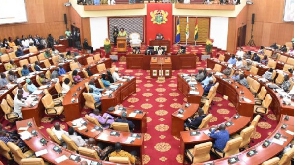
 A file photo of the parliament house
The Ghana Centre for Religion and Public Life (CRPL-Ghana) has petitioned Parliament’s Committees on Constitutional and Legal Affairs and Human Rights to reject the proposed Human Sexual Rights and Family Values Bill, 2025, describing it as discriminatory and a threat to fundamental freedoms.
In a memorandum addressed to Mahama Shaibu, Chairperson of the Committee on Constitutional and Legal Affairs, and Ernest Yaw Anim of the Committee on Human Rights, the faith-based civil society organisation outlined a series of religious, cultural and academic objections to the controversial legislation.
CRPL-Ghana stated its “honest and strongest opposition” to the bill in its entirety, arguing that its provisions are “grievously and deadly discriminatory” and could lead to injustice, abuse and public health concerns.
According to the organisation, “the bill risks marginalising LGBTQ+ individuals and could trigger psychological, emotional and physical harm, as well as broader societal instability.”
Despite acknowledging the religious backing for the bill, CRPL-Ghana contended that its provisions contradict core teachings of Christianity and Islam.
The group cited biblical and Islamic principles of love, compassion and equality, arguing that the bill fails to uphold the dignity of all persons as created in the image of God.
It referenced teachings of Jesus Christ on unconditional love and the Prophet Muhammad’s emphasis on compassion and mutual respect, asserting that these values should guide national decision-making.
The organisation also challenged cultural justifications for the bill, noting that “Ghana does not have a single, unified cultural standard.”
It argued that what is considered taboo varies across ethnic groups, making it inappropriate to legislate based on a singular cultural perspective.
Here is the latest update on the Anti-LGBTQ+ Bill
CRPL-Ghana further rejected comparisons between LGBTQ+ individuals and criminals, such as armed robbers, calling such analogies misleading and harmful.
It emphasised that criminal acts like child grooming and paedophilia should be addressed independently of sexual orientation.
The memorandum highlighted concerns about potential public health implications, including mental health challenges and stigma. It also questioned provisions requiring individuals, including parents, religious leaders, and healthcare professionals, to report suspected LGBTQ+ persons to authorities, citing ethical dilemmas and breaches of confidentiality.
CRPL-Ghana warned that the bill could undermine academic freedom as guaranteed under Article 21(1)(b) of Ghana’s 1992 Constitution. It argued that restricting research, teaching, and publication on human sexuality and gender studies would stifle knowledge production and intellectual discourse.
AM
Meanwhile, learn of the story of the man behind the iconic Akwaaba frames in Ghana:

Copyright © 1994 - 2026 GhanaWeb. All rights reserved.










