



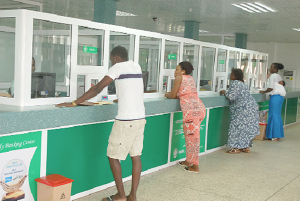
 Rural banks have been described as the most dependable bridge between the informal economy
Sector experts and policymakers at The Money Summit 2026 (TMS 2026) have strongly affirmed that Ghana’s newly rebranded community banks are the state’s most critical vehicle for deepening financial inclusion and driving sustainable grassroots economic transformation.
Speaking during the summit’s third plenary session, high-level panellists argued that while large commercial banks routinely avoid the high-risk informal market, the country’s rural banking network successfully anchors the financial ecosystem for the nation’s most vulnerable populations.
The third plenary session, themed ‘Deepening financial inclusion, the strategic role of rural banks in Ghana’s economic transformation’, mapped out how the country’s community banking network – now 147 institutions strong – is closing the access gap for millions of Ghanaians even as it undergoes a sweeping regulatory reform programme.
The speakers described community banks not as small, peripheral players but the most dependable bridge between the informal economy – which accounts for roughly 80 percent of local economic activity – and the formal financial system.
Organised by Business and Financial Times under the broader theme ‘Building trust, capital and stability for Ghana’s economic future’, the summit convened principal policymakers, bankers, investors and development finance practitioners to assess the country’s macroeconomic outlook and regulatory developments.
Retooling community banks for resilience
A major highlight of the plenary session was the sector’s structural evolution as highlighted by the Bank of Ghana (BoG).
Representing the BoG, Kingston Ocloo – Assistant Director and Head of the Community Banks Office at the Bank of Ghana’s (BoG) Other Financial Institutions Supervision Department (OFISD) – officially explained the apex regulator’s fresh reforms.Business News
Most notably, the central bank has integrated the legacy rural and community banks (RCBs) framework into a unified system – officially designating all such institutions as community banks.
The structural overhaul introduces significantly tighter capital obligations aimed at absorbing market shocks and addressing historical vulnerabilities such as weak internal control systems, inadequate corporate governance and a shortage of skilled personnel.
With the new BoG capital requirements, existing community banks’ capital requirements are being increased from the previous GH₵1million floor up to GH₵5million.
New market entrants must now possess a minimum capitalisation of GH₵10million to secure an operational licence.
“Banking is a regulated system; therefore, dos and don’ts exist that must be adhered to. Minimum capital is set to support the risk that an institution is going to take. If a bank wants to take a bigger risk, there is a need for increasing its capital to accommodate such risks. The reforms’ main purpose is to ensure the capital level is increased and banks are robust enough,” Mr. Ocloo stated.
Community banks’ role in financial inclusion
Alhaji Hayatudeen Awudu Ibrahim, CEO of BESSFA, told the packed conference that the 147 community-focused institutions operate about 850 branch networks and service points across the country, delivering critical services to people that the universal banks would hardly want to reach.
Those services – including deposit mobilisation that is reinvested in the same communities, funds transfers and credit – are explicitly designed to advance the social and economic development of areas they serve, he said.
Dr Alex Asmah, CEO of Amenfiman Community Bank, put the trust factor at the heart of the inclusion story.
He described rural and community banks as “the most trusted financial institutions in the country”, precisely because they provide credit and other services to a sector neglected by commercial banks.
“This informal sector contains almost 80 percent of the local economy. Commercial banks are unable to penetrate that area because they usually end up making a loss or increasing non-performing loans. But because a community bank is owned by the people, trusted by the people and operates among the people, it can understand the people and deliver services in a way that brings profit and promotes growth,” he explained.
The rural and community banks model, which has evolved over 50 years, now holds 8.3 million distinct accounts; a figure Dr. Asmah contrasted sharply with the approximately 2.1 million people who rely on pension funds.
“Community banks are one of the most important vehicles regarding financial inclusion,” he reiterated.
Institutional architecture
The sector’s operational stability is structurally linked to the ARB Apex Bank model. Samuel Gyimah Amoako, Head of Finance-ARB Apex Bank, explained that the entity functions at the sector’s apex, exercising delegated supervisory powers from the Bank of Ghana to monitor compliance and run non-banking support services.Ghana mining sector
He explained that ARB stands for the Association of Rural Banks (ARB) Apex Bank, a body that sits at the sub-sector’s summit and exercises complementary supervisory authority delegated by the Bank of Ghana.
The Apex model, he noted, has helped drive the proportion of unbanked rural populations down from 70 percent to 30 percent with further improvement still being pursued.
ARB Apex Bank retains five percent of rural and community banks’ deposits and operates a common digital platform shared by all the institutions, a factor that allowed the network to weather shocks which hit other parts of the financial system.
“No rural bank was touched during the financial sector clean-up,” Amoako stated, attributing that resilience to the strategic planning of ARB.
Backing the model, Desmond Bredu, Head of Client Coverage-Stanbic Bank Ghana, emphasised that the network’s ultimate objective is socio-economic advancement.
He remarked that the unique Apex infrastructure successfully guarantees rural micro-businesses and individuals can reliably access their funds wherever they find themselves across the country.
Digitalisation
While community banks traditionally lack the capital to deploy massive proprietary digital infrastructure like giant commercial institutions, they have successfully bypassed this barrier via strategic agility.
By partnering with agile financial technology (FinTech) firms and utilising a common digital platform shared by all units through ARB Apex Bank, community banks are rolling out modern digital services – thus securing their status as the vanguard of modern financial inclusion in Ghana.

Copyright © 1994 - 2026 GhanaWeb. All rights reserved.










