



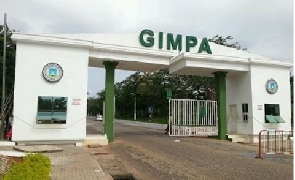
 Entrance of the Ghana Institute of Management and Public Administration (GIMPA)
The Ghana Institute of Management and Public Administration (GIMPA) Alumni Association is grappling with a major leadership crisis, as growing discontent brews over allegations of financial mismanagement, lack of transparency, and overstayed leadership against its National President, Norman Yemetey Tetteh.
Aggrieved alumni have accused Tetteh of holding onto power for over a decade without organising democratic elections contrary to established constitutional provisions and best practices for leadership renewal.
At the heart of the controversy is the alleged disappearance of over GH¢5 million in alumni dues.
Members claim that during Tetteh’s prolonged tenure, no financial statements have been shared, nor have independent audits been conducted to account for the Association’s funds.
“Norman and his executives have run the Association like a personal kingdom,” said Kwame Boadi, a GIMPA graduate.
“There’s no accountability. Alumni are completely in the dark about how their contributions are being spent.”
In 2016, Tetteh announced a $10 million public-private partnership project to construct a 600-bed hostel facility on GIMPA’s main campus in Accra.
The project was expected to break ground in February 2017 and be completed within two years. However, years later, there is no visible sign of progress—no development, no signboard, and no explanation.
“It was all a ruse,” said Serwaa Ofori, a management consultant and alumna.
“There’s absolutely nothing to show. The money is unaccounted for, and no one has explained why the project failed to take off.”
Critics describe Tetteh’s leadership style as authoritarian, claiming it has stifled engagement, discouraged participation, and fractured unity within the alumni body.
“Ten years in office without any tangible results or effort to unite the alumni community is not leadership—it’s a clear abuse of office,” said a senior alumnus who spoke on condition of anonymity.
Concerns have also been raised over the Association’s practice of collecting mandatory dues from graduating students at every congregation, with little to no benefits or programmes offered in return.
“Every year, thousands of cedis are collected, yet there are no alumni events, no professional development programmes, no scholarships—nothing,” lamented Daniel Mensah, a recent graduate.
Despite widespread dissatisfaction, Tetteh continues to represent the association on GIMPA’s Governing Council, where he is believed to receive allowances.
Many alumni are now questioning the legitimacy of his continued tenure on the Council in light of the unresolved issues surrounding his leadership and of election.
They argued that per the constitution, elections are to be held every three years.
The GIMPA Corporate Affairs Unit has also come under fire for what members describe as years of inaction and complicity.
According to some alumni, the unit has failed to respond to multiple petitions and complaints, allowing Tetteh to remain in office unchallenged.
“They’ve ignored our calls for change and have enabled the current leadership’s excesses. It’s deeply disappointing,” said Grace Ofori, a well-known alumna.
In response to the ongoing crisis, a growing number of members are calling for urgent and decisive actions. They are demanding:
The immediate dissolution of the current alumni leadership, a full forensic audit of alumni financial records,the formation of an interim committee to oversee elections and reforms, and the rejection of any future nomination of Tetteh as the alumni representative on GIMPA’s Council.
“We believe in the values and integrity GIMPA stands for,” said Boadi. “This situation must not continue. It’s time for a total reset.”
Responding to a question posed by Classfmonline.com to Tetteh on the delays in holding elections, he said: "Not entirely true, but an election is coming on soon. A meeting has been scheduled with management in two weeks to draw up timelines for elections, please. Thanks."
Meanwhile, catch up on the concluding part of the story of Fort William, where children were sold in exchange for kitchenware, others, below:

Copyright © 1994 - 2026 GhanaWeb. All rights reserved.










