



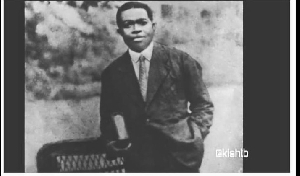
 Alfred Sam was a merchant and a businessman in the Gold Coast
Alfred Charles Sam, a Ghanaian born around 1880 in the then Gold Coast, in a small town called Apaso in the West Akim District, made history as the first merchant from the Gold Coast to send a ship to the United States of America.
He went to school in Kyebi, where he got his education from a Christian mission school. After school, he became a trader, buying and selling things like rubber and other goods, according to multiple online accounts.
His goal was to help Black people (African Americans) living in the US at the time return to their ancestral homeland in Africa and reconnect with their roots, using his ship.
A pioneer Pan-Africanist, Sam strongly believed that all Black people, no matter where they lived in the world, were connected and should unite.
Between 1913 and 1915, he worked hard to help African Americans, Black people living in the United States, return to Africa, the land of their ancestors. Many of these people were suffering from racism and unfair treatment in America.
Alfred Sam believed they could live better, freer lives back home in Africa.
The story of why a sitting US president offered an apology to a Ghanaian at the White House
Chief Alfred Sam also promised the African Americans fertile land, freedom, and a chance to start fresh in the Gold Coast.
He also encouraged them to buy $25 worth of stock in his Akim Trading Company, which he owned. His intention was to help develop trade between West Africa and the United States by exporting commodities such as cocoa, coffee, and mahogany to the US, while also encouraging Black American farmers and mechanics to settle in Africa and contribute to the growth of its economy.
In 1914, that ship set sail from New York with about 60 African American men and women on board. They were hopeful and excited to return to their ancestral land. This journey became part of what is called the Back-to-Africa Movement.
Sadly, when they arrived in the Gold Coast, things did not go as planned. There were official restrictions, not enough resources, and poor planning. The promised land was not ready. There were shortages of food and supplies. Life was hard, and the dream began to fall apart.
Many of the intended settlers faced physical and financial hardships, became discouraged, and felt misled by Sam’s promises. Some eventually returned to Oklahoma, while others chose to remain in Africa, settling in cities or moving to Liberia.
Sam’s venture eventually collapsed; he sold the ship and returned to his trading business.
MAG/AE
Akrobeto reacts to Agradaa's jail term for the first time



Copyright © 1994 - 2026 GhanaWeb. All rights reserved.










