



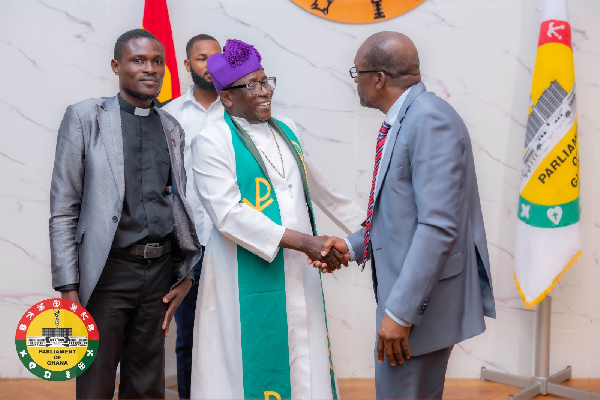
 Rev Akakpo in a handshake with Speaker Alban Bagbin (middle) during their meeting
The Pan Africa Clergy Council (PACC) has called on Parliament to intensify its legislative and oversight responsibilities in addressing rising insecurity, economic hardship, environmental destruction and ethical decline in the country.
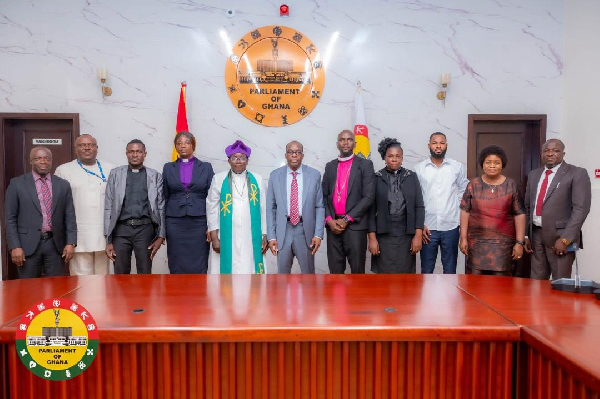
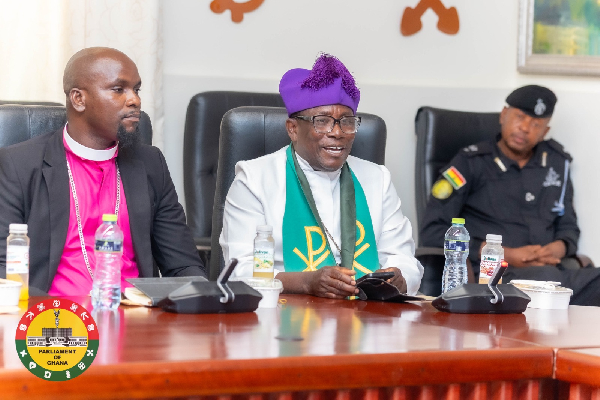
The appeal was made by the Head of the Council, Rev Frederick Akakpo, during a courtesy meeting with the Speaker of Parliament, Alban Bagbin, in Accra.
Rev Akakpo commended the Speaker for what he described as his “neutrality, strategic clarity and unwavering commitment to procedural integrity,” which, he said, had strengthened Ghana’s parliamentary democracy and earned him the admiration of faith communities across the continent.
According to him, Parliament under the Speaker’s leadership has shown “exemplary legislative maturity” and enhanced public trust in democratic governance.
Rising insecurity
Highlighting critical national concerns, Rev Akakpo expressed alarm over increasing criminal activity in parts of the Greater Accra Region — citing Kasoa, Ashaiman, Adjei Kojo, Amasaman, Tantra Hills and Pokuase — as well as pockets of violent crime emerging in the Ashanti, Eastern, Northern and Savannah regions.
“These developments disrupt social stability and challenge the state’s capacity to ensure public safety,” he warned.
The council urged Parliament to champion reforms in security coordination, intelligence operations, logistics deployment and community policing, insisting that public security is not just operational but a constitutional right.
LGBTQ bill
Touching on the ongoing national debate on LGBTQ issues, the Pan Africa Clergy Council reaffirmed its support for the passage of the LGBTQ Bill currently before Parliament.
Rev Akakpo said the matter represented “a profound moral and cultural crossroads,” and urged lawmakers to remain guided by national values, constitutional prudence and the need to safeguard social cohesion.
Galamsey destruction
The council also raised strong concerns about the destruction caused by illegal mining, describing it as one of the gravest threats to Ghana’s ecological and economic future.
It proposed a structured partnership among the government, traditional authorities and religious bodies to combat the menace.
“The Church, as custodian of moral consciousness, and traditional rulers, as custodians of the land, must be integral to national strategies against illegal mining,” Rev Akakpo stressed, urging Parliament to provide the legislative framework for such collaboration.
Economic pressures
Rev Akakpo further noted the economic pressures facing households, including inflation, unemployment and rising living costs.
He called for stronger parliamentary oversight of fiscal policy and public expenditure, and encouraged efforts to promote inclusive growth, expand local industry and create opportunities for the youth.
Fight against corruption
Describing corruption as a “corrosive force threatening public trust,” the council advocated a broader anti-corruption framework that incorporates religious bodies.
He argued that because many public officials implicated in corruption belong to various churches and mosques, religious leaders must be empowered to play a role in moral accountability and value-based mentorship.
“Tracing corrupt officials to their faith communities is not for blame, but for moral intervention,” he emphasised.
Council ready to partner Parliament
Rev Akakpo assured the Speaker that the Council stands ready to collaborate with Parliament in areas including governance ethics, civic education, national value formation and faith-based community mobilisation.
He concluded by expressing confidence in Parliament’s ability to protect Ghana’s democratic future, praying for God’s blessing on the nation and the continent.
Meanwhile, watch as Global Data Protection expert Patricia Poku outlines key projects she is leading:

Copyright © 1994 - 2026 GhanaWeb. All rights reserved.










