



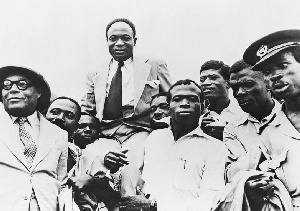
 Osagyefo Dr Kwame Nkrumah hailed after attaining independence for Ghana
The month of February has many commemorative activities that mark events that occurred before Ghana’s independence.
One of such events is the 28th February 1948 Riot, which indeed did not only trigger the independence of Ghana but also the fight for freedom across the entire African continent.
On this fateful day, a group of ex-servicemen who were on a peaceful parade at the crossroads near the Governor’s office in the Gold Coast (now Ghana) to present a petition to him about unpaid wages and broken promises after fighting for the British in the Second World War were shot dead.
The event also paved the way for the independence of other African colonies.
An article by Face2face Africa, published by GhanaWeb in 2020, gives details of what transpired before and after the shooting.
Background
In January 1948, Nii Kwabena Bonne II, the Ga chief, organised a boycott of all European goods in response to their high prices, which were taking a toll on the living conditions of people in the Gold Coast. The campaign to boycott European imports became part of the preparation towards independence.
On the last day of the boycott, African ex-servicemen began a march from Accra to the British Governor at the Osu Castle to present a petition. They were stopped by the police. These ex-servicemen were veterans of the Second World War and members of the Gold Coast Regiment who were part of the African soldiers fighting alongside British troops in Burma.
Before the war, they were promised pensions and jobs. However, when they returned to their homes after the war, those entitlements were not met. They could not find jobs, and their pensions were never given to them. Their march was, therefore, to petition the Governor of the Gold Coast to demand that the pensions and compensations promised them for their gallant roles in the war be paid.
As they marched towards the Governor’s residence at the Christiansborg Castle in Osu, the colonial police stopped them. The British head of police, Superintendent Imray, ordered his officers to shoot at the protesters, but they shot into the air. Imray, who was getting frustrated, grabbed a gun from one of the officers and shot into the crowd, killing three of the ex-servicemen – Sergeant Adjetey, Corporal Attipoe and Private Odartey Lamptey. Some other protesters suffered varying degrees of injuries.
What happened next?
The news of the shooting spread like wildfire to Accra and other major towns and cities in the country. Law and order broke down, and Accra went through days of rioting, with Asian- and European-owned stores and businesses being looted. This period was referred to as the 1948 disturbances.
The Governor subsequently declared a state of emergency, and a new Riot Act was put in place. Anti-colonial movements also demanded that the British government institute a committee to investigate the killings and the riots that followed.
The Watson Commission was eventually set up by the British colonial government. It looked into the events that resulted in the riots and eventually opened the door for constitutional changes which led to Ghana’s independence.
Nkrumah and the CPP
Following the 1948 riots, the “Big Six”, that is, the leading members of the United Gold Coast Convention (UGCC) – Kwame Nkrumah, J.B. Danquah, Edward Akufo-Addo, Ebenezer Ako-Adjei, William Ofori Atta and Obetsebi Lamptey – were arrested on March 12, 1948, for being behind the disturbances. They were detained but released a month later.
A year later, Kwame Nkrumah broke away from the UGCC and formed his own party – the Convention People’s Party (CPP). With the party’s motto of “self-government now” and other activities, the party won the admiration of many voters. In 1952, Nkrumah became prime minister. In 1960, Ghanaians approved a new constitution and elected Nkrumah president after the country had gained independence from the British on March 6, 1957.
Click to read the original article:
BAI
'Veep has chosen Haruna Iddrisu as her running mate' – Afenyo-Markin alleges:
Meanwhile, watch more videos from the Minority's presser on government accountability below:
'I’ll apologise my foot' - Kennedy Agyapong defiant over ‘Bawumia is a liar’ claim:
Meanwhile, watch as family of taxi driver murdered at Tetegu recounts incident

Copyright © 1994 - 2026 GhanaWeb. All rights reserved.










