



 The reversal came just hours after oil markets had already priced in the opening
Iran's Islamic Revolutionary Guard Corps declared Saturday that control of the strait has "returned to its previous state," walking back a brief opening announced Friday and directly contradicting a claim from President Donald Trump that the world's most critical oil chokepoint was fully open for business.
Tehran's joint military command said the strait is now under "strict management and control of the armed forces" and accused the U.S. of "piracy" -- a reference to Washington's ongoing naval blockade of Iranian ports, which the IRGC says violates the terms of the ceasefire. Until that blockade is lifted, the strait stays shut.
The reversal came just hours after oil markets had already priced in the opening. Brent crude fell roughly 9.5% to around $89.89 a barrel Friday after Trump announced the strait was open. WTI slid more than 10% to $84.89. Those moves are likely to reverse when markets open.
The back-and-forth traces a familiar arc from this conflict. The war began Feb. 28 when the U.S. and Israel struck Iranian military targets. Iran shut the strait within days.
After weeks of aerial bombardment and failed negotiations, the U.S. imposed a full naval blockade of Iranian ports on April 13 following the collapse of Islamabad talks. Iran agreed to limited reopening after a Lebanon ceasefire took hold -- then reversed course Saturday after Trump said the American blockade "will remain in full force" until Tehran signs off on a nuclear deal.
"As President Trump said, the Strait of Hormuz is completely open for business, and Iran has agreed to never close the Strait again," White House deputy press secretary Anna Kelly said in a statement. The statement made no reference to the IRGC's announcement.
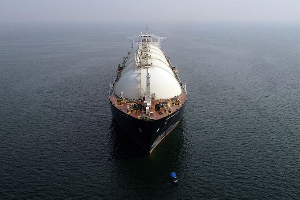
On the water, the picture is murky. Reuters reported a convoy of liquefied petroleum gas carriers and product tankers departing the Gulf and transiting the strait. Bloomberg, meanwhile, reported several oil tankers had turned back in the Persian Gulf after appearing to attempt passage. Ship tracking data confirms minimal traffic in the region.
The conditions Iran has set for transit haven't changed: commercial vessels only, no cargo or ships linked to "hostile countries," movement along Iranian-designated routes, and coordination with IRGC forces. Military vessels are barred. In practice, that means most Western-linked shipping still can't move freely.
The strait handles roughly 20% of global oil supply -- around 20 million barrels per day. The IEA has warned recovery of Middle East oil output could take up to two years. Pakistan's army chief wrapped up a three-day visit to Tehran on Friday aimed at arranging a second round of nuclear talks after Islamabad produced no deal.
For now, the strait is closed, the blockade holds, and the gap between what Washington is saying and what Tehran is doing is as wide as it has been since the conflict began.

Copyright © 1994 - 2026 GhanaWeb. All rights reserved.










