



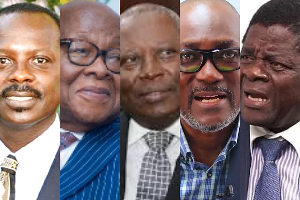
 Ghana’s legal brains split in high-stakes battle over OSP's authority
The debate surrounding the prosecutorial powers of the Office of the Special Prosecutor (OSP) has divided the public, including even some of the finest legal brains in Ghana.
The debate started after the Supreme Court refused a joinder filed by the OSP in a suit against it in a unanimous ruling, stating that: “We are of the view that the Office of the Special Prosecutor is not a necessary party to the action and that this suit may be properly adjudicated upon without their presence (sic) as parties. This application for joinder is therefore refused.”
It became even more intense after the Office of the Attorney General, through the Deputy Attorney General and Minister of Justice, Justice Srem-Sai, filed arguments in the Supreme Court seeking that the Court declare Section 4(2) of the Office of the Special Prosecutor Act, 2017 (Act 959), unconstitutional and strike it down to the extent of its unconstitutionality.
Subsequently, the High Court in Accra, on April 15, 2026, stripped the Office of the Special Prosecutor (OSP) of its prosecutorial powers. The court held that the Office of the Special Prosecutor requires the authorisation of the Attorney-General to initiate and conduct prosecutions of corruption and related offences, and ordered that the Office of the Attorney-General take over all the cases of the OSP.
The main bone of contention:
At the heart of this debate is the interpretation of three laws:
First, Section 4(2) of the Office of the Special Prosecutor Act, 2017 (Act 959), which states that "Subject to clause (4) of Article 88 of the Constitution, the Office shall, for the purposes of this Act, be authorised by the Attorney-General to initiate and conduct the prosecution of corruption and corruption-related offences."
Another law at the heart of the matter is Article 88(4) of the 1992 Constitution of Ghana, which states that "All offences prosecuted in the name of the Republic of Ghana shall be at the suit of the Attorney General or any other person authorised by him in accordance with any law."
The third law is Article 88(3) of the Constitution, which states that “the Attorney-General shall be responsible for the initiation and conduct of all prosecutions of criminal offences”.
Though to the layman these laws might have single meanings, the experts are giving different meanings to them, which has resulted in them either supporting the rulings of the High Court and Supreme Court on the powers of the OSP or opposing them.
Here is what these legal luminaries have said:
Those who have said OSP needs no authorisation from the AG:
1. Prof Henry Kwesi Prempeh:
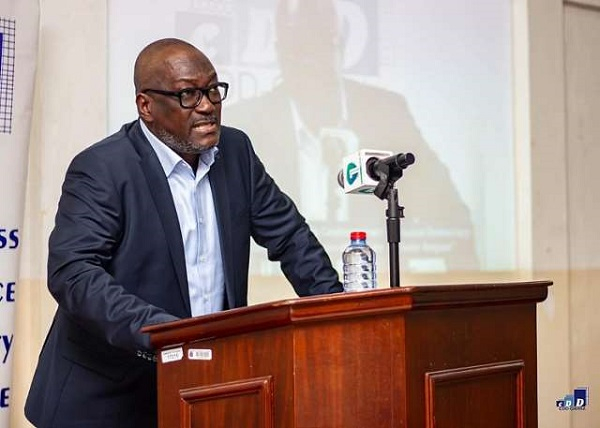
The Executive Director of the Centre for Democratic Development, Prof Henry Kwesi Prempeh, called out the Supreme Court and the Office of the Attorney General (AG) over its handling of a suit filed against the Office of the Special Prosecutor (OSP) by Noah Tetteh.
In a post shared on Facebook on April 9, 2026, the CDD-Ghana boss, who chaired the Constitution Review Commission formed by President Mahama, was dumbfounded that the apex court of the land did not allow the OSP to file a defence in the matter.
He indicated that it was wrong for the court to allow the Attorney General's Office to represent the OSP in the matter because the AG's Office is on the side of the plaintiff.
"So the Supreme Court of Ghana will not allow the 'real party in interest', the OSP in this case, to defend against a lawsuit challenging the constitutionality of its statutory establishment and existence, but will allow the 'nominal defendant', the AG, whose position and interest in the suit is not adverse to that of the plaintiff, to file a purported defence that agrees with the position of the plaintiff," he said.
He pointed out that it is unbelievable that the court would allow the Attorney-General's Office, represented by the Deputy Attorney General and Minister of Justice, to argue against the OSP without hearing its side.
"Refusing to allow the OSP to defend this suit filed by plaintiff Noah E. Tetteh and, instead, allowing the AG to come to court in the person of Deputy AG, Justice Srem-Sai, in the position of nominal defendant to advance a position in agreement with the plaintiff's, makes a mockery of our adversarial system of justice.
"Let the OSP defend this suit. The law is not an ass. Or maybe it is in Ghana," he added.
In another post on the matter, he told the Special Prosecutor, Kissi Agyaben, not to resign even if his powers are taken away.
"Mr Special Prosecutor, please don't appeal, and don't resign o; don't! Don't even fight it in the media. Relax koraa. You and your staff should just sit tight and collect your pay and perks and spend your budget as planned, ok. That, too, counts as public service in GH. Don't kill yourself over this! Country broke or no broke, we all dey inside unequally, of course!" the CDD boss wrote.
2. Prof Kwaku Azar:
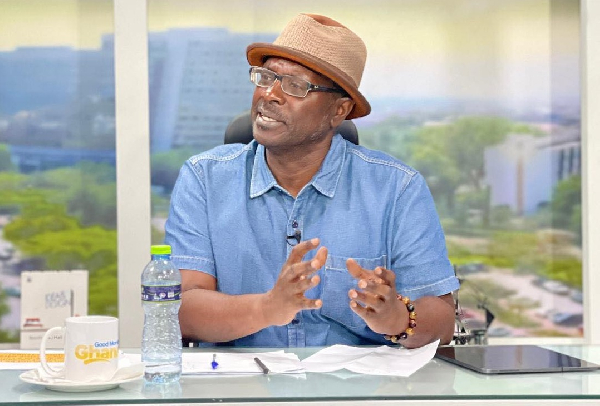
US-based Ghanaian academic and legal scholar, Professor Stephen Kwaku Asare (Kwaku Azar), has also particularly criticised the ruling of the court, describing it as “narrow” and filled with "political speculation".
"The court suggests that because Article 88 is entrenched, the creation of the OSP may have been driven by a desire to fulfil a campaign promise through 'legislative gymnastics designed to avoid the constitutional amendment process'. By invoking political motivations, the court shifts from legal interpretation to a normative critique of legislative policy, which is not the function of a trial court exercising judicial review.
"Moreover, the suggestion that the OSP's creation reflects an attempt to circumvent Article 88 tends to prejudge the very issue the court was required to determine. The reasoning, therefore, moves beyond interpretation and into conjecture. It attributes motive where the legal inquiry requires analysis. In doing so, it risks undermining the neutrality of the exercise and weakens what would otherwise be a serious constitutional argument," he said.
Kwaku Azar added that the judge, in his decision, "did not just interpret the law" but rather "speculated about why it was made", which should not be the case.
He further stated that the ruling of the court "blurs the critical distinction between facts and law in its timing analysis", "understates the constitutional nature of the dispute", and also used the wrong "legal tool" to arrive at its decision.
3. Kofi Bentil:
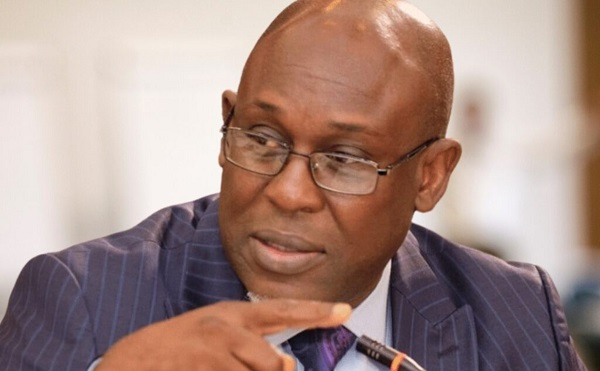
Vice President of IMANI Africa, Kofi Bentil, has also opposed the ruling of the courts, arguing that the OSP was created with binding authority and should not be undermined.
Lawyer Kofi Bentil questioned the High Court’s decision, particularly at a time when the Supreme Court is already considering the matter.
“The past Attorney-General passed a law, along with a Legislative Instrument, binding on the current AG to establish the OSP. If the OSP needs authority, which is false, then it should be granted. Why weaken it? High Courts must defer to the Supreme Court in matters of interpretation. So how does a High Court make such a ruling when the Supreme Court is hearing the same issue?” part of a series of posts he shared on Facebook reads.
In a separate post, Bentil emphasised that legal interpretation should prioritise substance over technical form. He argued that the government is relying on procedural technicalities to weaken the OSP.
Those who have said the OSP needs the authorisation of the AG:
1. Prof Mike Ocquaye

Former Speaker of Parliament, Aaron Mike Oquaye, has supported the ruling of the courts.
Speaking in an interview with JoyNews, Prof Oquaye said the decision did not come as a surprise to him, pointing to the supremacy of the 1992 Constitution of Ghana over all other laws.
"The constitutional provisions we give the Attorney-General as the sole authority to prosecute cannot co-exist with another organisation until the Constitution is amended. If it's against the law, it's against the law," Prof Oquaye stated.
Although he presided over Parliament when the OSP law was passed, he clarified that his role as Speaker was only to guide proceedings, not to influence decisions.
Beyond the legal arguments, the former Speaker expressed concern about what he sees as a growing tendency to create new institutions to address existing problems. Instead, he believes the focus should be on strengthening current structures, particularly the Office of the Attorney-General.
"All our institutions must be made stronger... The institution that is there to do a job, give it every authority, every facility, every human power, every ICT resource, and anything so that they can deliver," he urged.
2. Martin Amidu:
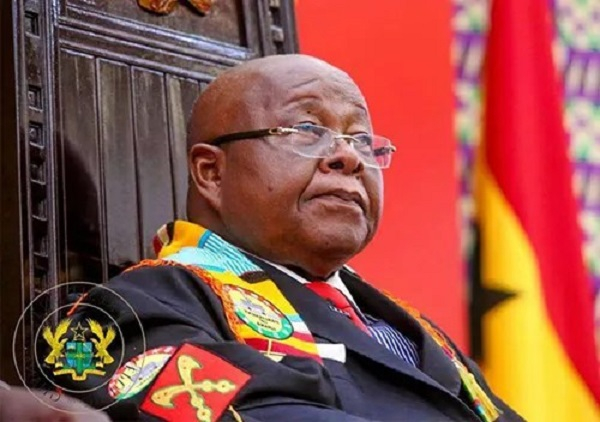
Former Special Prosecutor Martin Amidu has also supported the decision of the Supreme Court.
In a statement slamming Prof Prempeh’s criticism of the court, Martin Amidu indicated that the ruling of the court was apt.
He argued that the CDD-Ghana boss should have had a better understanding of the matter, given his alleged role in the drafting of the law establishing the OSP.
“Mr H. Kwasi Prempeh, the Executive Director of the Centre for Democratic Development (CDD-Ghana), who played a central role with President Akufo-Addo and his Attorney-General, Ms Gloria Akuffo, in the drafting and submission of the Office of the Special Prosecutor Bill, 2017, to Parliament for enactment and assent into law as Act 959, now blames the Supreme Court for complying with the mandatory terms of Article 88(5) of the Constitution in refusing the joinder application by the OSP,” he said.
Article 88(5) of the 1992 Constitution states that “all civil proceedings against the State shall be instituted against the Attorney-General as defendant.” The Supreme Court’s unanimous decision dated April 9, 2026, refusing the OSP’s application for joinder, Amidu noted, is consistent with that provision.
The former Special Prosecutor insisted that the ruling was correct because, under current law, only the Attorney-General can represent a state agency in legal proceedings brought against it.
He further argued that criticism of the ruling was based on a misunderstanding of the law, adding that nothing under adversarial justice prevents the Attorney-General from admitting aspects of a plaintiff’s case, however controversial that may be.
3. Dr Ansa-Asare:
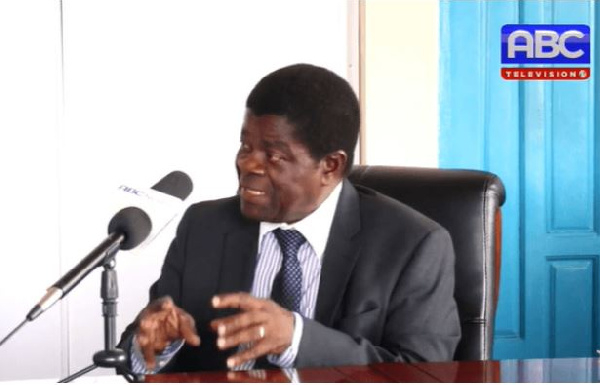
Former Director of the Ghana School of Law, Dr Kwaku Ansa-Asare, has also stated that the Office of the Special Prosecutor (OSP) does not possess independent prosecutorial authority, stressing that such powers are vested solely in the Office of the Attorney General.
Speaking on JoyNews and monitored by GhanaWeb on April 15, 2026, Dr Ansa-Asare explained that the distinction lies in the legal foundations of the two institutions.
“You know, it’s a matter of surprise that we can create a body by statute and try to equate it with the Office of the Attorney General, which is a creature of the Constitution,” he said.
He further underscored that the Attorney General’s prosecutorial authority is constitutionally entrenched, unlike that of the OSP.
“The OSP is a creature of statute, while the Office of the Attorney General is established under Article 88 of the 1992 Constitution. After all is said and done, it is the Attorney General in whom the authority to prosecute resides,” he stressed.
BAI
2026 Ghana Beverages Awards hailed as biggest and best so far - Emma Wenani

Copyright © 1994 - 2026 GhanaWeb. All rights reserved.










