



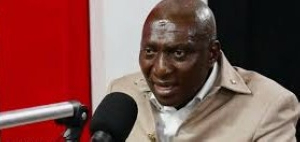
 Farouk Al-Wahab is an International Security Consultant
International Security Consultant Farouk Al-Wahab has stated that the management of recurring xenophobic attacks on black foreign migrants in South Africa lies with the presidency.
It must, however, be stated that President Cyril Ramaphosa has strongly condemned the recent wave of xenophobic attacks in South Africa, emphasising that no grievance can justify violence against foreign nationals, including Ghanaians.
In response to the escalating tensions, Ghana’s diplomatic mission has urged its citizens in South Africa to prioritise their personal safety.
Speaking to JoyNews on April 27, 2026, International Security Consultant Farouk Al-Wahab reiterated the presidency’s clear message that attacks on foreign nationals are unacceptable.
He recalled Ghana’s earlier support for the anti-apartheid movement at the United Nations and questioned how South Africans could overlook the contributions of countries that sheltered members of the African National Congress (ANC) during its liberation struggle.
Al-Wahab pointed out that countries such as Mozambique, Zimbabwe, Zambia, Botswana, and Namibia provided refuge to ANC leaders, including Oliver Tambo, Walter Sisulu, and Thabo Mbeki, while they were hunted by apartheid forces.
He recalled the brutal events of the 1980s, including the Matola Massacre in Mozambique and the assassination of President Samora Machel.
In line with historical records of xenophobic attacks in the country, Al-Wahab noted with concern that Mozambique was the first country to experience attacks, followed closely by Zimbabwe.
He quoted the words of President Ramaphosa, “We did not walk into this freedom on our own. These countries opened their borders to our liberation fighters. Their countries were bombed. Their nationals were killed. It cannot be and must never be that we trample into the dust the African fellowship that made our freedom possible.”
Al-Wahab, however, lamented, saying that the presidency's message comes too late.
He pointed out that attacks occurred under former President Thabo Mbeki, and increased during Jacob Zuma’s tenure, and have since continued under Ramaphosa.
He dismissed claims that Ghanaians are taking jobs from South Africans, stating that “75% to 80% of Ghanaians in South Africa are hairdressers. What jobs have they taken?”
He criticised the weak enforcement of laws, citing instances where civilians have commanded hospitals to refuse services to foreigners while police were present but refused to act.
“The South African police force is one of the strongest in Africa. How are mobs able to move from ghettos to the streets?” he questioned.
Al-Wahab also hit South Africa’s visa system, calling it “extreme” for charging separate fees for hairdressing, fiancée, and business permits in one passport, whereas Ghana grants South Africans 90 days visa-free, but South Africa limits Ghanaians to 90 days cumulatively per year.
He reminded leaders that agreements made in Durban by Kufuor, Mbeki, Obasanjo, Gaddafi, and others recognised the importance of free movement and maintained that the agreement should be rightly enforced.
Al-Wahab insisted that “the responsibility to end the attacks rests squarely on the South African presidency and the ANC government.”
NAD/VPO
Health Focus: Sucking breast isn’t therapy for men - Doctor

Copyright © 1994 - 2026 GhanaWeb. All rights reserved.










