



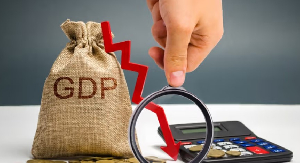
 Strong GDP growth can coexist with limited domestic wealth creation
The imperative for Africa to reclaim greater control over its economic destiny by shifting away from narrow GDP-led assessments of growth toward frameworks centred on sovereignty, domestic value retention and regional industrial integration dominated discussions at the 2026 Ishmael Yamson and Associates Business Roundtable in Accra.
Held under the theme ‘The next quarter century: infrastructure, integration and African sovereignty’, the forum convened policy-makers, corporate leaders and development strategists who argued that Africa’s long-standing dependence on extractive growth models — increasingly mirrored in the digital economy — has left the continent generating wealth without sufficiently retaining it, underscoring the need to rethink how growth, trade and investment are structured across the continent.
A major focus of the discussion was the distinction between gross domestic product (GDP) and gross national product (GNP). While GDP measures the total value of goods and services produced within a country’s borders regardless of ownership, GNP measures the income ultimately earned by a country’s citizens and businesses, including income generated abroad, while excluding profits repatriated by foreign firms.
Speakers argued that the gap between the two is particularly significant for resource-dependent African economies, where strong GDP growth can coexist with limited domestic wealth creation and weak employment outcomes if profits largely leave the continent.
Setting the tone for the discussions, Ishmael Yamson Jr., Chief Executive Officer of Ishmael Yamson and Associates, criticised conventional growth metrics for obscuring the extent to which economic activity benefits local economies.
“GDP is merely a measure of extraction. When a foreign conglomerate extracts a billion from our soil and repatriates the dividends, our GDP rises and we celebrate; but it creates zero employment in our economies,” he said.
He challenged CEOs in the room to pool balance sheets across borders and build Pan-African joint ventures capable of outcompeting legacy global firms, warning that “treaties do not build supply chains.”
Finance Minister, Dr Cassiel Ato Forson, echoed the sentiments in his keynote address, telling delegates that the tragedy of Africa’s economic history is not the absence of resources; it has been the persistent export of value and the import dependency, and warned that the pattern was now repeating itself in digital form.
“Our raw materials still leave. Increasingly, our data also leaves. Who owns Africa’s digital waves? Who stores Africa’s data? Who finances Africa’s fibre backbone? And who controls Africa’s payment systems?” he quizzed.
He announced that Ghana was targeting 3,000 megawatts of additional installed generation capacity by 2030, with 30 percent from renewables, and framed energy access as a precondition for industrialisation.
“We cannot industrialise in darkness,” he said, noting that Africa collectively loses an estimated US$25 billion annually to power outages despite being endowed with abundant gas, hydro, solar, wind and critical minerals.
On trade, he observed that intra-African trade accounts for only 15 percent of Africa’s total trade compared to nearly 70 percent within Europe and approximately 50 percent in Asia; and asked: “Can Africa’s manufacturers scale if markets remain fragmented? Can we build continental champions without harmonising regulation and integrated capital markets?” he noted.
Dr Nii Moi Thompson, Chairman of the National Development Planning Commission, delivered the day’s most data-intensive assessment, presenting comparative figures showing that sub-Saharan Africa has regressed on several critical infrastructure indicators over the past 25 years.
Electricity consumption per capita declined from an average of 452 kilowatt-hours in the previous 25-year period to approximately 431 kilowatt-hours in the most recent, while East Asia recorded growth of over 300 percent over the same timeframe.
79773615Manufacturing as a share of GDP fell from 16.2 percent to 10.9 percent across Africa, while Asia’s rose to 28 percent.
Dr. Thompson attributed a significant share of this regression to the abandonment of long-term planning, documenting four national development plans produced since 2015, the 40-Year Development Plan, Ghana Beyond Aid, Ghana at 100, and Ghana 2057, none of which had been implemented.
He noted that Ghana shelved its 40-year plan the same year China launched Made in China 2025.
“We brushed it aside over some of the most petty complaints,” he said, adding that a decade was lost to disputes over whether the document should be called a ‘framework’ rather than a ‘plan’.
He confirmed that President Mahama had directed the NDPC to prepare a consolidated plan anchored in the Directive Principles of State Policy under Chapter 6 of the Constitution, and that MDAs were now being sanctioned for spending budget allocations without reference to approved plans.
On productivity, Dr Thompson presented data showing Ghana’s labour productivity at US$11.60 per hour against a world average of US$23, driven almost entirely by mining, financial services and industrial agriculture.
He noted that 92 percent of Ghanaian businesses operate in the informal sector, accounting for 80 percent of jobs but only 27 percent of GDP.
“We do not have jobless growth. We have growth-less jobs,” he said and announced that the NDPC was developing a three-dimensional growth measurement framework tracking GDP alongside employment creation and wage growth, describing it as a fundamental redefinition of how Ghana measures economic success.
Augustine Chiew, Chief Technology Officer for Public Services at Huawei, urged African governments to treat digital infrastructure as a core economic competitiveness imperative, arguing that connectivity improvements directly drive GDP per capita growth and that 5G’s low latency capabilities were critical for industrial transformation in sectors such as mining and logistics.
Drawing on a recent tour across seven countries, he identified a persistent pattern of strong Phase 1 execution on digital projects followed by failure to sustain subsequent phases.
“Nothing big and worthy to be done gets done in one phase,” he said, contrasting this with China’s model of successive five-year plans in which each cycle builds on the last.

Copyright © 1994 - 2026 GhanaWeb. All rights reserved.










