



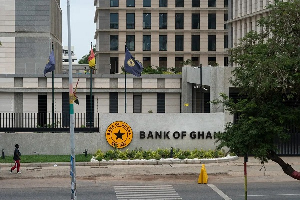
 Bank of Ghana headquarters
The Bank of Ghana (BoG) has withdrawn GH¢17.24 billion from the banking system through the sale of its 14-day bills as part of efforts to keep inflation under control and maintain the stability of the cedi.
The move shows the central bank's commitment to reducing excess cash in the economy, which can increase demand for foreign currency and push prices higher.
According to Notice to Banks and the Public No. 865, the auction held on June 8, 2026, attracted total allotments of GH¢17.24 billion. Interest rates offered by banks ranged from 10.46% to 10.95%, while the average rate settled at 10.98%.
BoG bills are different from Treasury bills because they are not used to raise money for government spending.
Instead, they are used by the central bank to manage the amount of money circulating in the economy.
The Bank of Ghana also aims to reduce inflationary pressures, limit speculation on the foreign exchange market and keep the economy stable.
The large amount raised through the auction also highlights the central bank's determination to closely monitor liquidity levels in the financial sector.
However, the Bank of Ghana will also need to ensure that enough funds remain available for banks to lend to businesses and support economic growth.
ANAS/SA
ITAS will deliver more efficient tax administration - Anthony Sarpong

Copyright © 1994 - 2026 GhanaWeb. All rights reserved.










