



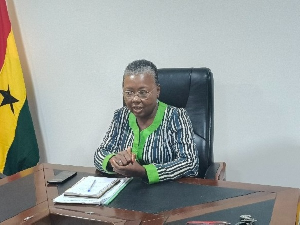
 Minister for Fisheries and Aquaculture, Emelia Arthur
Minister for Fisheries and Aquaculture Development, Emelia Arthur, has announced that Ghana is seeking to mobilise at least $10 million in private sector investment by 2032 through Africa's first Blue Food Innovation Hub.
Speaking at the Our Ocean Conference 2026 in Mombasa, Kenya, on Tuesday, June 16, 2026, she said the initiative is expected to drive innovation, attract investment and support sustainable growth within Ghana's fisheries and aquaculture sector.
According to the minister, the Blue Food Innovation Hub forms part of the government's broader efforts to modernise the sector, expand aquaculture production and create new economic opportunities while ensuring the sustainable management of aquatic resources.
Increasing retirement age could have dire consequences - SSNIT boss warns
She noted that Ghana has undertaken several reforms aimed at strengthening fisheries governance, improving transparency and enhancing productivity across the industry.
Arthur explained that the government continues to invest in aquaculture development and value-addition initiatives as part of efforts to improve food security and safeguard aquatic resources for future generations.
She identified the establishment of Africa's first Blue Food Innovation Hub as one of the flagship initiatives demonstrating Ghana's commitment to transforming the fisheries and aquaculture sector.
The hub, launched by the Chamber of Aquaculture Ghana in collaboration with the World Economic Forum, is expected to accelerate innovation across fisheries and aquaculture, support the growth of inland aquaculture enterprises and attract significant private sector investment.
According to the minister, the initiative will also promote entrepreneurship, technology adoption and sustainable practices within the sector.
Arthur further called on African countries to strengthen collaboration in integrating fisheries and aquaculture into national climate strategies, stressing the importance of resilient aquatic food systems in addressing food security and climate-related challenges.
“As African nations, we must work together to accelerate investments in sustainable aquaculture. We must strengthen fisheries governance, reduce post-harvest losses, expand regional trade, and create more inclusive value chains that benefit women, youth and small-scale producers,” she said.
She maintained that increased investment and stronger regional cooperation would be essential to unlocking the full potential of Africa's fisheries and aquaculture sector while supporting economic growth and job creation across the continent.
ANAS/MA
ITAS will deliver more efficient tax administration - Anthony Sarpong

Copyright © 1994 - 2026 GhanaWeb. All rights reserved.










