



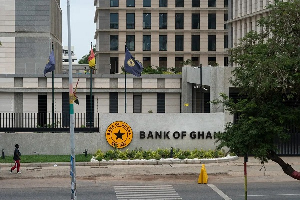
 Ghana’s 147 rural banks transition to Community Banks under BoG reforms
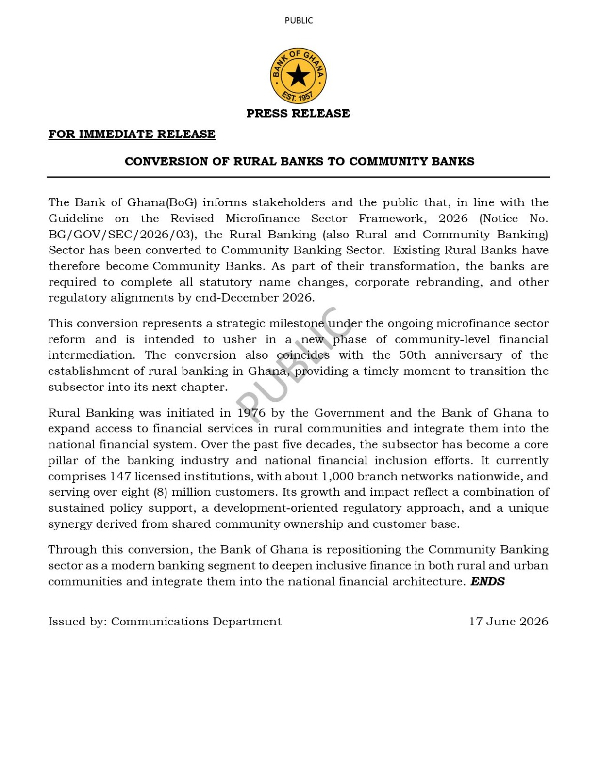
The Bank of Ghana (BoG) has announced a major reform in the microfinance space, converting all Rural and Community Banks into Community Banks under its Revised Microfinance Sector Framework 2026. The change affects all existing rural banks across the country.
According to a statement dated June 17, 2026, the institutions involved are expected to complete all required statutory updates, including new names, branding, and regulatory adjustments, by December 2026.
The reform is part of efforts to modernise Ghana’s microfinance sector and improve financial inclusion in both rural and urban areas.
This transition also coincides with 50 years since the introduction of rural banking in Ghana. The model was launched in 1976 by the Government of Ghana and the Bank of Ghana to extend banking services to underserved communities and bring more people into the formal financial system.
Increasing retirement age could have dire consequences - SSNIT boss warns
Over the past five decades, rural banks have grown into an important part of the country’s banking system, playing a key role in financial inclusion. The sector now includes 147 licensed institutions with close to 1,000 branches nationwide, serving more than eight million customers.
The Bank of Ghana says the change is aimed at repositioning the sector for its next phase of development. The new Community Banking structure is expected to create a more modern and inclusive system that better responds to changing financial needs while supporting economic growth at the community level.
Authorities believe the reform will help expand access to financial services, strengthen community-focused banking, and improve the link between local economies and the wider financial system.
AROUND TOWN: Ghanaians share their struggles with rising cost of rent
AK/BAI

Copyright © 1994 - 2026 GhanaWeb. All rights reserved.










